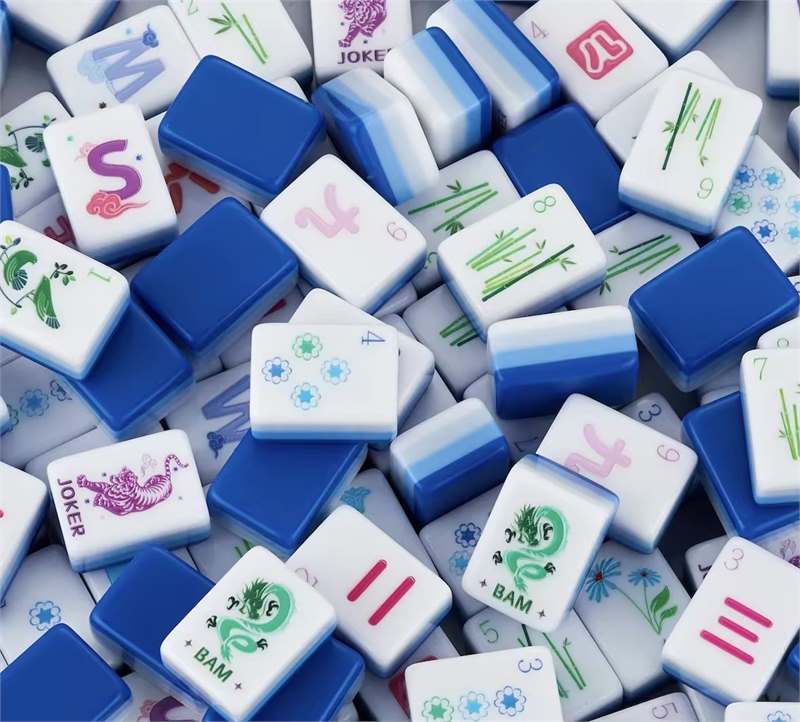
The standard weight of a premium American Mahjong tile falls between 14 and 18 grams per tile, with most tournament-quality sets settling in the 15 to 16 gram range. This weight range provides the optimal balance of tactile satisfaction, table stability, and manageable total set weight for transport. Tiles significantly lighter than 14 grams feel flimsy and are easily knocked over during play, while tiles heavier than 18 grams make the full 152-tile set cumbersome to carry and can cause fatigue during extended game sessions.
Understanding tile weight is more than trivia for enthusiasts. It directly affects your playing experience, your ability to transport the set, and even the sound the tiles make on the table — a surprisingly important factor for many dedicated players.
Why Tile Weight Matters in American Mahjong
Weight influences every aspect of the physical playing experience. Here is how.
Stability during wall building. American Mahjong requires each player to build a wall of 19 tiles stacked two high in front of their rack. Lightweight tiles are more likely to topple when adjacent tiles are drawn or when the table is bumped. Heavier tiles stay put, maintaining a clean wall throughout the game. A difference of just 2 grams per tile translates to noticeably better wall stability.
Tactile feedback during drawing and discarding. Drawing a tile from the wall and placing a discard on the table are the two most repeated physical actions in Mahjong. Heavier tiles provide more sensory feedback, which many players find satisfying and which helps build muscle memory for efficient play. The weight of the tile in your hand as you draw it creates a moment of tactile engagement that lightweight tiles simply do not deliver.
Sound quality. This is the factor most non-players underestimate. The sound of Mahjong tiles being placed on a table is an integral part of the game experience in American Mahjong culture. Heavier, denser tiles produce a deeper, more resonant "clack" that players find pleasing. Lighter tiles produce a higher-pitched, less satisfying sound. In social Mahjong settings, the collective sound of tiles being shuffled and placed creates an atmosphere that lighter tiles diminish.
Total set weight for transport. A 152-tile set with 15-gram tiles weighs approximately 2.3 kilograms or about 5 pounds in tiles alone. The same set with 18-gram tiles weighs about 6 pounds. Add racks, pushers, dice, and a carrying case, and the total set weight ranges from 8 to 15 pounds. According to players who regularly transport their sets, anything over 12 pounds total becomes uncomfortable for walks longer than a few blocks.
The Standard Weight Range Explained
Premium American Mahjong tiles cluster into three weight categories, each with distinct characteristics.
Standard premium tiles at 15 to 16 grams are the most common weight for quality American Mahjong sets. This range provides excellent stability and tactile feedback without making the total set excessively heavy. Most sets from established American Mahjong manufacturers fall in this range. According to NMJL standard tournament guidelines, there is no specified tile weight requirement, but the 15 to 16 gram range has become the de facto standard through industry consensus.
Heavy premium tiles at 17 to 20 grams are favored by some experienced players who prefer maximum stability and the most substantial feel. These tiles are less likely to shift during gameplay and produce the deepest, most satisfying clack. The downside is increased total set weight and higher shipping costs for online orders. Heavy tiles also tend to be more expensive because they use more raw material.
Lightweight tiles at 10 to 14 grams are typical of travel sets and budget sets. They are perfectly playable but lack the satisfying heft of standard or heavy premium tiles. Travel-focused players often accept this trade-off for the portability benefit. Some budget manufacturers use lighter tiles to reduce material costs, which is why unusually light tiles in a full-price set can be a warning sign of quality compromises.
How Tile Weight Is Determined
Tile weight is primarily a function of three factors: material density, tile dimensions, and manufacturing precision.
Material density is the largest contributor. Melamine resin, the most common material for premium American Mahjong tiles, has a density that naturally produces tiles in the 15 to 18 gram range at standard tile dimensions. Urea resin, used in some premium sets, is slightly denser and produces marginally heavier tiles. ABS plastic, used in budget and travel sets, is lighter and produces tiles in the 10 to 14 gram range.
Tile dimensions are relatively standardized for American Mahjong. The typical full-size tile is approximately 33 millimeters tall by 23 millimeters wide by 13 millimeters thick. These dimensions have been consistent for decades and are optimized for readability and handling. Manufacturers who deviate significantly from these dimensions are usually making travel or mini sets, not standard premium sets.
Manufacturing precision affects weight consistency. In a quality set, all tiles should weigh within 1 gram of each other. Significant weight variation from tile to tile indicates inconsistent molding, which can also affect tile shape, size, and flatness. You can check detailed specifications on specialized US Mahjong guides like lukmaj.com for weight specifications of specific models.
How to Check Tile Weight Before Buying
If you are shopping in person, bring a small digital scale that reads to 0.1 grams. Weigh five to ten tiles from different suits and check the consistency. If you are shopping online, look for these indicators.
Product specifications that list per-tile weight or total tile weight. Reputable manufacturers provide this information. If it is not listed, ask the seller directly. A manufacturer confident in their tile weight will respond with specific numbers.
Product reviews that mention tile weight or heaviness. Players who notice tile weight — either positively or negatively — will mention it in reviews. Multiple reviews describing tiles as "substantial" or "heavy" generally indicate 15 grams or above. Reviews mentioning "light" or "feels cheap" suggest tiles below 14 grams.
Product category. Sets described as "tournament," "premium," or "professional" almost always have tiles in the 15 to 18 gram range. Sets described as "travel," "compact," or "mini" use lighter tiles by design.
The Relationship Between Weight and Quality
Weight alone does not determine quality, but there is a strong correlation for specific reasons.
Heavier tiles at standard dimensions indicate denser material, which typically means better quality resin. Dense resin is more resistant to chipping, scratching, and marking wear. It also produces better engraving results because the material is harder and holds fine detail more precisely.
The raw material cost of tile resin is proportional to the amount used. A manufacturer choosing to use more material per tile is investing more in the product. This investment usually extends to other quality factors like engraving, paint fill, and case quality.
However, weight is not a perfect quality indicator. A tile can be heavy and still have poor engraving, bad paint fill, or inconsistent dimensions. Use weight as one factor in your quality assessment, not the only factor. A set with 16-gram tiles but sloppy paint and rough edges is not a good purchase at any price.
Weight Comparisons Across Popular Set Types
To put these numbers in context, here are typical weight ranges for common American Mahjong set categories.
Budget tabletop sets with ABS plastic tiles: 10 to 13 grams per tile, 4 to 6 pounds total set weight. Suitable for learning and occasional play.
Standard quality sets with melamine resin tiles: 14 to 16 grams per tile, 7 to 10 pounds total set weight. Good for regular weekly play.
Premium tournament sets with high-density resin: 16 to 18 grams per tile, 10 to 14 pounds total set weight. Ideal for dedicated players and tournament use.
Vintage Bakelite sets: 15 to 19 grams per tile depending on the era and manufacturer. Bakelite's natural density places most vintage tiles in the premium weight range.
Travel and mini sets: 8 to 12 grams per tile, 3 to 5 pounds total set weight. Optimized for portability over tactile experience.
Maintaining Tile Weight Consistency
Over the lifetime of a set, tile weight should remain constant. Tiles do not normally gain or lose significant weight through play. However, there are scenarios where weight changes matter.
Moisture absorption is theoretically possible with some resin types but is not a practical concern for normal indoor play. If tiles are stored in a very humid environment for extended periods, some slight weight gain is possible, but this is rare and reversible by drying the tiles.
Material loss through wear is more relevant. Tiles that are heavily used may lose tiny amounts of material through surface abrasion, especially on the edges and corners. This weight loss is negligible in practical terms but is one reason why very old, heavily played sets may feel slightly lighter than when new.
Paint wear in engravings can reduce weight by a fraction of a gram per tile. Again, this is negligible for gameplay purposes but technically changes the tile weight. Deep engraving with proper paint fill minimizes this effect.
FAQ
Is heavier always better for Mahjong tiles?
No. Beyond about 18 grams per tile, the additional weight provides diminishing returns in stability and feel while making the set heavier to transport. The 15 to 16 gram range is widely considered the optimal balance for most players.
Why do some tournament players prefer heavier tiles?
Heavier tiles stay in place more reliably during fast-paced tournament play, where the table is frequently jostled and tiles are drawn quickly. The additional weight also provides more consistent tactile feedback, which helps tournament players maintain their rhythm during long sessions.
Does tile weight affect gameplay speed?
Not directly. The speed of gameplay is determined by player skill and group dynamics, not tile weight. However, some players find that heavier tiles slow them down slightly because each draw and discard requires more physical effort. The effect is minimal and most players do not notice it.
How much does a full set of premium American Mahjong tiles weigh?
At 15 grams per tile, 152 tiles weigh approximately 5.1 pounds or 2.3 kilograms. At 18 grams per tile, the same 152 tiles weigh about 6.0 pounds or 2.7 kilograms. Adding four racks with pushers, dice, and a carrying case brings the total set weight to between 8 and 15 pounds depending on the case material and accessories included.
Can tile weight vary between different suits in the same set?
In a quality set, no. All tiles should be manufactured from the same material batch with consistent dimensions, producing uniform weight across all suits. Noticeable weight differences between suits indicate quality control problems in the manufacturing process.