
Direct answer
Lucite and acrylic are the same family of material. Lucite is a trade name for poly(methyl methacrylate), or PMMA, the plastic most people call acrylic; it was introduced in the United States by DuPont, alongside other PMMA trade names such as Plexiglas and Perspex. When a seller describes "Lucite mahjong tiles," they almost always mean acrylic tiles. The name tells you the material family, not the quality, thickness, construction or finish. To compare sets, ask about those details instead of the label.
Key takeaways
- Lucite is a brand name for acrylic (PMMA). In everyday use, "Lucite" and "acrylic" describe the same kind of plastic.
- The label does not describe quality. Two acrylic sets can differ widely in thickness, layering, color and finish.
- Vintage sets are often different materials. Many older American sets were made from early plastics such as Bakelite or Catalin, not acrylic.
- Specify construction, not the name. Ask for single-layer, two-tone or multilayer, dimensions and marking method.
- Use the term your customers search for, but describe the product accurately.
Where the word "Lucite" comes from
Acrylic glass, chemically PMMA, was commercialized in the late 1930s under several trade names. In the United States, DuPont introduced its version under the trademark Lucite. Other well-known names for the same type of material include Plexiglas and Perspex.
Over time, "Lucite" became a common word for clear or colored acrylic objects in American homes, from jewelry to furniture. That is why many Mahjong players, especially those who learned the game decades ago, still call acrylic tiles "Lucite."
Lucite tiles vs acrylic tiles today
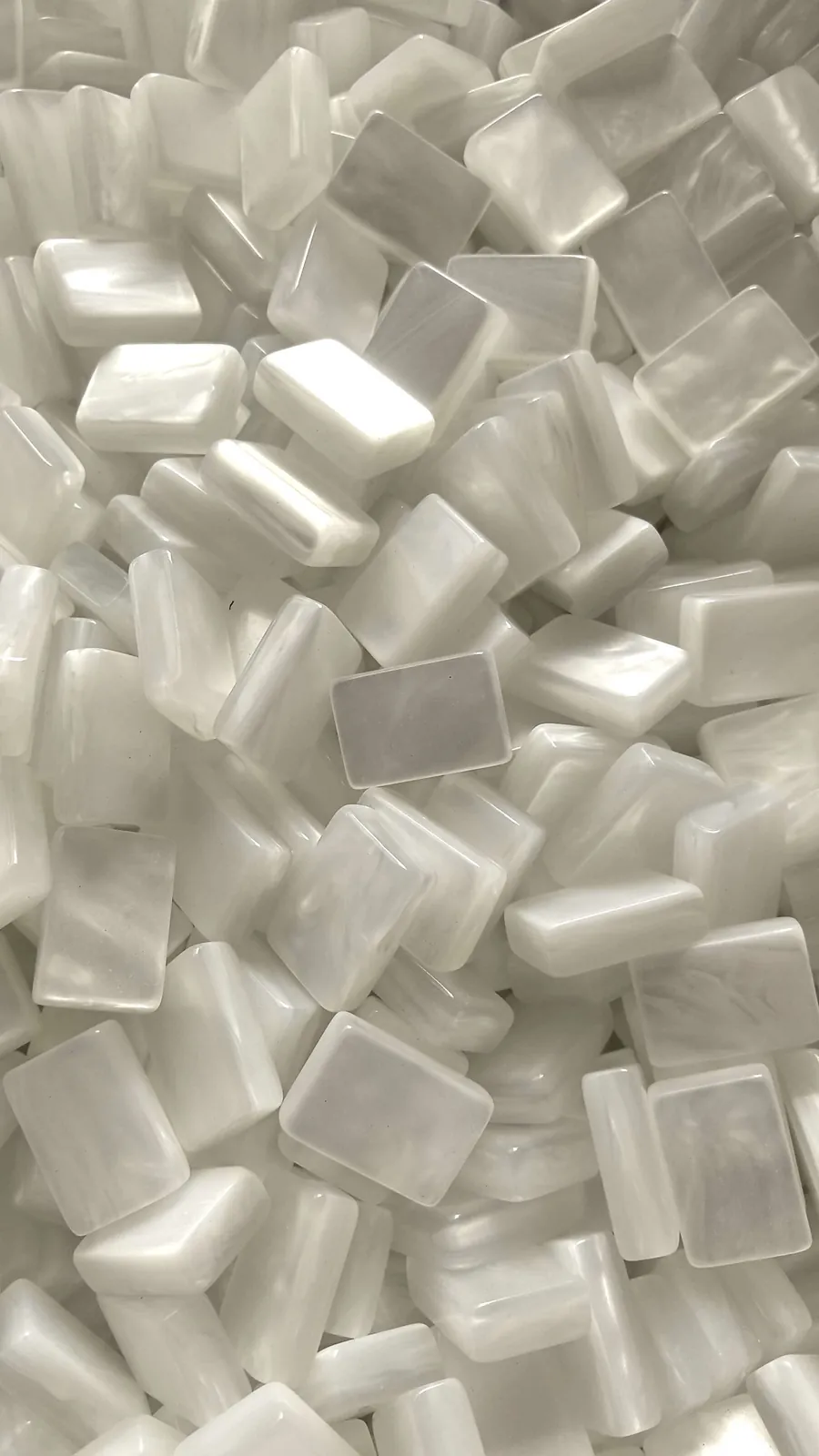
For a buyer, there is no practical material difference between a set described as Lucite and one described as acrylic. What matters is how the tiles are made:
| What to compare | Why it matters |
|---|---|
| Construction (single-layer, two-tone, multilayer) | Changes look, edge appearance and production steps. See layer options |
| Opacity (clear, translucent, opaque) | Affects readability and style. See clear vs translucent vs opaque |
| Dimensions and thickness | Affects feel, weight and rack fit. See the tile size guide |
| Marking method | Engraving with color fill or UV printing |
| Edge finish | Square, chamfered or rounded. See edge finish guide |
| Surface finish | Gloss, matte or textured |
A product page that says "Lucite tiles" without these details is not giving you enough information to compare sets.
How vintage sets differ
Collectors and longtime players often compare modern acrylic sets with older American sets. Many vintage sets were made from early plastics such as Bakelite and Catalin, which have their own look, weight and aging characteristics. Some older sets were also described as Lucite. If you sell or source sets with a vintage look, describe the material you actually use, and avoid implying that a new acrylic set is a vintage material. Our comparison of vintage and modern American Mahjong sets covers the style differences.
Should a brand use the word "Lucite"?
Many shoppers search for "Lucite mahjong set," so the word can help customers find you. If you use it:
- Describe the material accurately: for example, "acrylic (often called Lucite) tiles."
- Do not suggest an affiliation with any trademark owner.
- Back the name with real specifications: construction, size, thickness and marking method.
This gives searchers the term they recognize while keeping your product description honest.
How to specify acrylic tiles for a custom set
When you request a quote, list:
- Material: acrylic (PMMA)
- Construction: single-layer, two-tone or multilayer
- Colors for each layer, with physical color references if important
- Opacity: clear, translucent or opaque
- Dimensions and thickness
- Edge and surface finish
- Marking method for each face group
- Tile count and manifest, including jokers and extras
A product specification sheet keeps these details in one place. For a wider comparison with other materials, see acrylic vs melamine vs resin.
Common mistakes
- Treating "Lucite" as a quality grade
- Comparing two "Lucite" sets on price without checking construction and thickness
- Describing new acrylic tiles as a vintage material
- Leaving out color references for layered tiles
- Choosing clear or glitter acrylic without checking readability
Buyer checklist
- [ ] Confirmed the material is acrylic (PMMA)
- [ ] Specified construction, opacity, dimensions and finish
- [ ] Reviewed a physical sample for color and readability
- [ ] Described the material accurately in product listings
- [ ] Avoided implying a trademark affiliation or vintage material
FAQ
Are Lucite mahjong tiles better than acrylic tiles?
No. Lucite is a trade name for acrylic. Quality depends on construction, thickness, finish and production control.
Why do older players call acrylic tiles "Lucite"?
Lucite was a widely known American trade name for acrylic, and the word became common for acrylic objects in general.
Were vintage mahjong tiles made of Lucite?
Many vintage American sets used early plastics such as Bakelite or Catalin. Check the specific set's history before describing its material.
Can I call my acrylic set a Lucite set?
Many sellers use the term because shoppers search for it. Describe the material clearly as acrylic and avoid implying any brand affiliation.
Next step
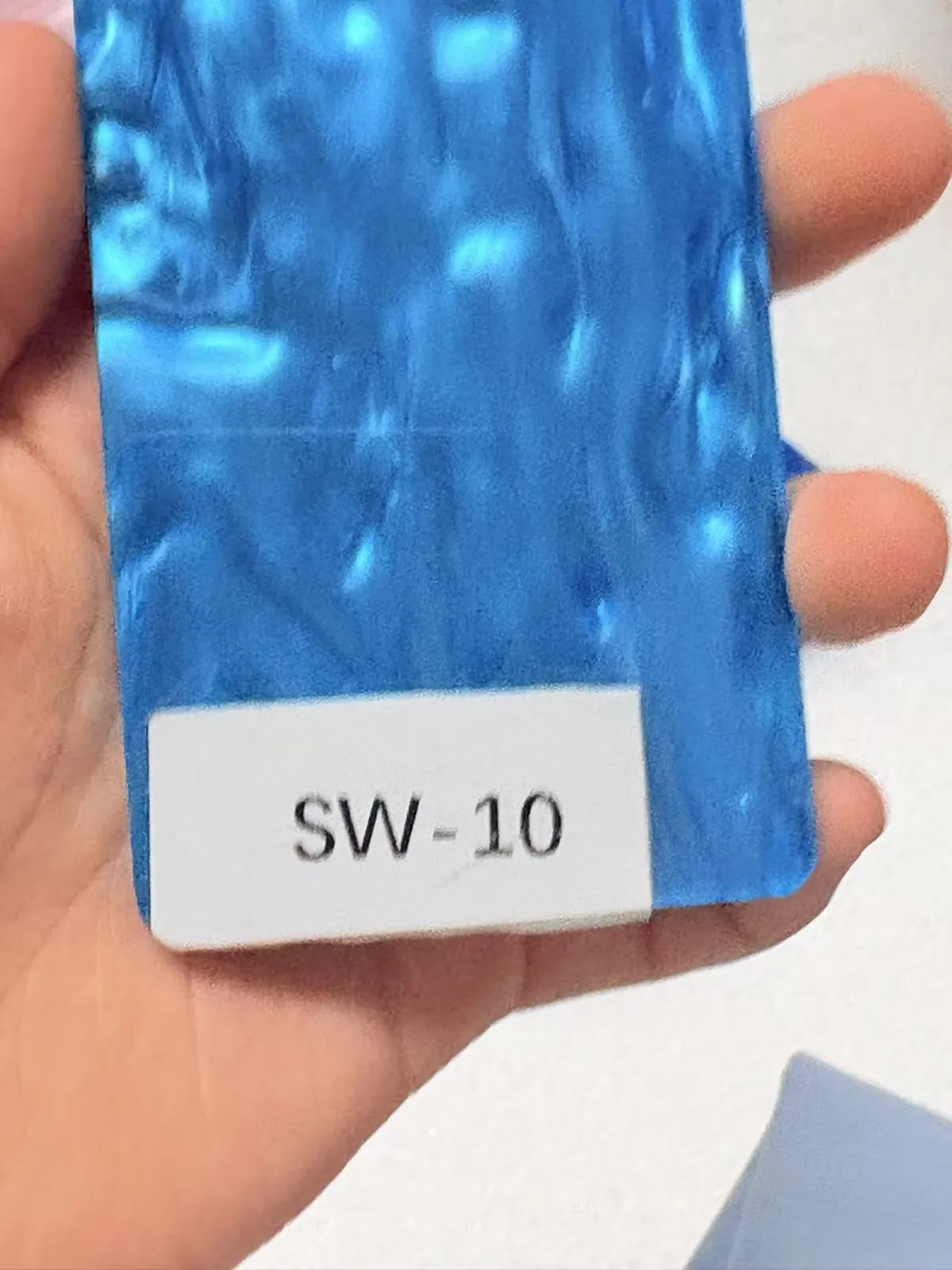
Tell Lucky Mahjong which acrylic look you want: clear, pearl, glitter, solid or layered. Include tile count, size, marking method and quantity, and we will recommend a construction and sample plan.