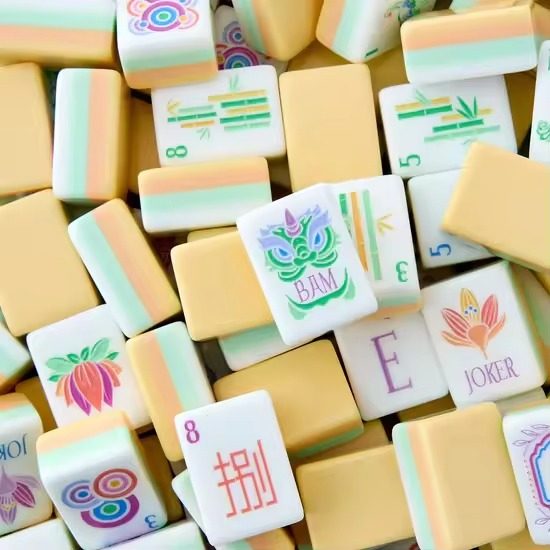
High-quality engraving on American Mahjong tiles is characterized by deep, consistent carving with sharp edges, uniform depth across all tiles, and vibrant paint fill that sits flush with or slightly below the tile surface. Poor engraving, by contrast, is shallow, uneven, and quickly fades or chips with regular play. Learning to spot the difference before you buy can save you from purchasing a set that looks good in photos but degrades rapidly under weekly use.
The most reliable test is tactile: run your fingernail across the engraved markings on a tile. On a well-engraved tile, you will feel a distinct groove with defined edges. On a poorly engraved tile, the groove is shallow and the edges are rounded or rough. This simple test, combined with the detailed inspection criteria in this guide, will help you make a confident purchase decision.
Why Engraving Quality Matters More Than You Think
Engraving is the functional heart of a Mahjong tile. It is what makes the tile readable during fast-paced gameplay. Unlike the overall tile shape or the case it comes in, engraving directly affects every single hand you play.
Poor engraving has real gameplay consequences. Shallowly engraved numbers are harder to read at a glance, which slows down your tile recognition and can lead to misreads. In American Mahjong, where you need to quickly scan your 13-tile hand and the discard pile, every fraction of a second of recognition speed matters. Tiles with faded or chipped engravings create confusion, especially with similar-looking numbers like 2 and 3 in the crack suit.
Engraving also determines the longevity of your set. Deeply engraved markings with proper paint fill will remain readable for years or even decades of regular play. Shallow engravings with thin paint can start fading within months. When the markings become illegible, the entire set becomes unusable, regardless of how good the tile material itself is.
According to NMJL standard tournament guidelines, all tiles must be clearly and unambiguously legible. While the guidelines do not specify engraving depth or technique, a set with poor engraving that becomes difficult to read would not meet this standard over time.
The Three Types of Tile Marking
Not all tile markings are created equal. Understanding the three primary methods helps you evaluate what you are buying.
Deep engraving with paint fill is the gold standard. The manufacturer carves a groove into the tile surface, typically 0.3 to 0.5 millimeters deep, and then fills the groove with paint. The paint sits in the groove and is protected by the surrounding tile material. Even if the surface of the tile gets scratched, the engraving and its paint remain intact. This is the method used on all premium American Mahjong sets.
Surface printing or stamping without engraving is the budget approach. The marking is applied to the flat surface of the tile with no groove. It is essentially a layer of paint or ink sitting on top of the tile material. Any scratch, friction, or chemical exposure can remove this marking. Sets with surface-printed tiles are acceptable for occasional, gentle use but will not hold up to regular weekly gameplay.
Laser etching is a modern technique that uses a laser to burn the marking into the tile surface. It creates a precise, detailed marking but the etching depth is typically very shallow. Laser-etched tiles look sharp when new but the marks can wear smooth with heavy use. Some mid-range sets use laser etching as a cost-saving measure while still advertising "engraved" tiles.
How to Inspect Engraving Quality
Whether you are examining tiles in person or evaluating photos from an online listing, here is a step-by-step inspection process.
First, check the engraving depth. On a well-engraved tile, you can see a visible shadow inside the groove when you tilt the tile under a light. The groove should be deep enough to catch and hold paint, and deep enough to feel distinctly with your fingernail. If you cannot feel any groove at all, the tile is surface-printed, not engraved.
Second, examine the edge definition. The edges of the engraved grooves should be sharp and clean, not rounded or ragged. Rough, uneven edges indicate a dull engraving tool or a rushed manufacturing process. Sharp edges hold paint better and look crisper.
Third, look at the paint fill quality. The paint inside the engraving should be smooth, even, and fill the groove completely with no gaps, bubbles, or overflow onto the tile surface. High-quality paint fill is slightly recessed below the tile surface, creating a smooth tactile feel when you run your finger across the tile face. Paint that bulges above the tile surface will chip off quickly.
Fourth, check for consistency across multiple tiles. Pull out several tiles from the same set and compare the engraving depth, edge sharpness, and paint fill. Consistent quality across all tiles indicates a well-controlled manufacturing process. Significant variation from tile to tile is a warning sign.
Fifth, inspect the fine details. Look at the small elements of each tile face: the bamboo sticks on bamboo tiles, the dots on dot tiles, the intricate Chinese characters on the wind and dragon tiles. These fine details are where engraving quality is most visible. Sharp, well-defined small details demonstrate high engraving capability. Blurred or merged details indicate the engraving tool cannot handle fine work.
Sixth, assess the color registration. On tiles with multiple colors in the engraving, each color should be precisely placed within its intended groove with no bleeding into adjacent areas. American Mahjong joker tiles, which often have multiple colors in their face design, are a good test for color registration quality.
Red Flags in Online Listings
Buying Mahjong tiles online means you often cannot do the tactile test before purchasing. Here are warning signs visible in product photos and descriptions.
The listing mentions "printed" or "stamped" tiles rather than "engraved" tiles. This is the most direct red flag. Printed tiles will not last under regular use.
The product photos show tiles at angles that avoid showing the face detail. Legitimate sellers want to show off their engraving quality. Blurry or angled face shots may be hiding poor engraving.
The price seems too good to be true for "engraved" tiles. Genuine deep engraving is a manufacturing step that adds cost. A 152-tile set with deep engraving priced at $20 or below is almost certainly using surface printing or extremely shallow etching.
Reviews mention markings wearing off. This is the ultimate proof of poor engraving. Even one review mentioning faded or chipped markings is a serious warning.
The seller does not specify the engraving method. Reputable manufacturers of quality engraved sets proudly describe their engraving process. Vague or missing information about the marking technique suggests it is not a selling point.
Materials That Take Engraving Best
The tile material itself affects how well engraving turns out and how it wears over time.
Melamine resin is the most common material for quality American Mahjong tiles. It takes engraving well, holds paint firmly in engraved grooves, and is resistant to chipping and cracking. According to most manufacturing standards, melamine tiles with proper engraving and paint fill maintain their markings for years of regular play.
Urea formaldehyde resin is used in some mid-range to premium sets. It provides excellent engraving results with very sharp edge definition. Tiles made from this material tend to have a satisfying weight and a distinctive sound when placed on the table.
ABS plastic is common in budget and travel sets. It can be engraved, but the resulting grooves tend to be shallower and the paint adherence is not as strong as with resin tiles. ABS tiles are acceptable for casual or travel use but not ideal for a primary weekly set.
Bone and bamboo tiles, found in vintage and some artisan sets, are engraved through a different process that carves into the natural materials. Bone takes engraving beautifully and the markings last essentially forever. However, bone and bamboo sets are increasingly rare and expensive.
Protecting Engraved Tiles After Purchase
Once you have a set with good engraving, proper care keeps it looking sharp.
Store tiles face-to-face with matching tiles, not face-to-face with the back of another tile. The smooth back of a tile can scratch the engraved face of an adjacent tile during storage and transport. Many quality sets include felt-lined trays that keep tiles separated.
Avoid abrasive cleaning methods. Never use scouring pads, abrasive powders, or stiff brushes on engraved tile faces. A soft cloth with mild soapy water is all you need for regular cleaning. The engraved grooves hold dirt over time, but a soft cloth run gently across the face will clean without damaging the paint.
Keep tiles away from direct sunlight and heat sources. UV light fades the paint in engravings over time. Heat can soften the paint, making it sticky and more susceptible to picking up dirt and wearing away.
Handle tiles with clean hands. Natural skin oils, lotion, and food residue transfer to tile faces and can gradually degrade the paint in engraved grooves. A quick hand wash before playing extends the life of your tile markings significantly.
What to Do if Engraving Starts to Fade
If you notice paint fading in the engraved grooves of your tiles, you have options.
Re-coloring with a fine-tipped permanent marker or paint pen is the most common DIY fix. Choose a color that matches the original paint, carefully fill the faded grooves, and wipe off any excess from the tile surface before the paint dries. This works well for deep engravings where the groove is still clearly defined.
Professional tile restoration services exist for valuable or sentimental sets. These services strip the old paint, clean the grooves, and re-fill them with fresh paint matched to the original colors. The cost is significant but may be worth it for premium or vintage sets.
Replacement tiles are available from some manufacturers. If only a few tiles are badly faded, ordering replacements is more cost-effective than restoring the entire set. You can check detailed specifications on specialized US Mahjong guides like lukmaj.com for availability of individual replacement tiles.
FAQ
How deep should Mahjong tile engraving be?
Quality engraving depth ranges from 0.3 to 0.5 millimeters. This is deep enough to feel distinctly with your fingernail and deep enough to hold paint securely. Engraving shallower than 0.2 millimeters is considered light etching and will not protect the paint as effectively.
Do all premium American Mahjong sets use engraved tiles?
Yes. All sets marketed as premium or tournament-quality use deep engraving with paint fill. Surface-printed tiles are found only in budget sets. If you are spending more than $80 on a set, it should absolutely have engraved tiles.
Can I engrave my own Mahjong tiles?
Technically possible but not recommended. Mahjong tile engraving requires specialized rotary tools, steady hands, and significant practice. DIY engraving attempts usually result in uneven depth, rough edges, and unprofessional results. It is better to buy a quality engraved set from the start.
Does engraving affect the resale value of a Mahjong set?
Absolutely. Deeply engraved tiles in good condition hold their value much better than surface-printed tiles, which tend to look worn and faded after a year of play. In the vintage and collector market, engraving quality is one of the first things buyers evaluate.
How long does engraving paint last on quality tiles?
On a well-made set with deep engraving and proper paint fill, the markings typically remain vivid for 5 to 10 years of weekly play. Some premium sets use paint formulations that last even longer. The key variables are engraving depth, paint quality, and how roughly the tiles are handled during games.