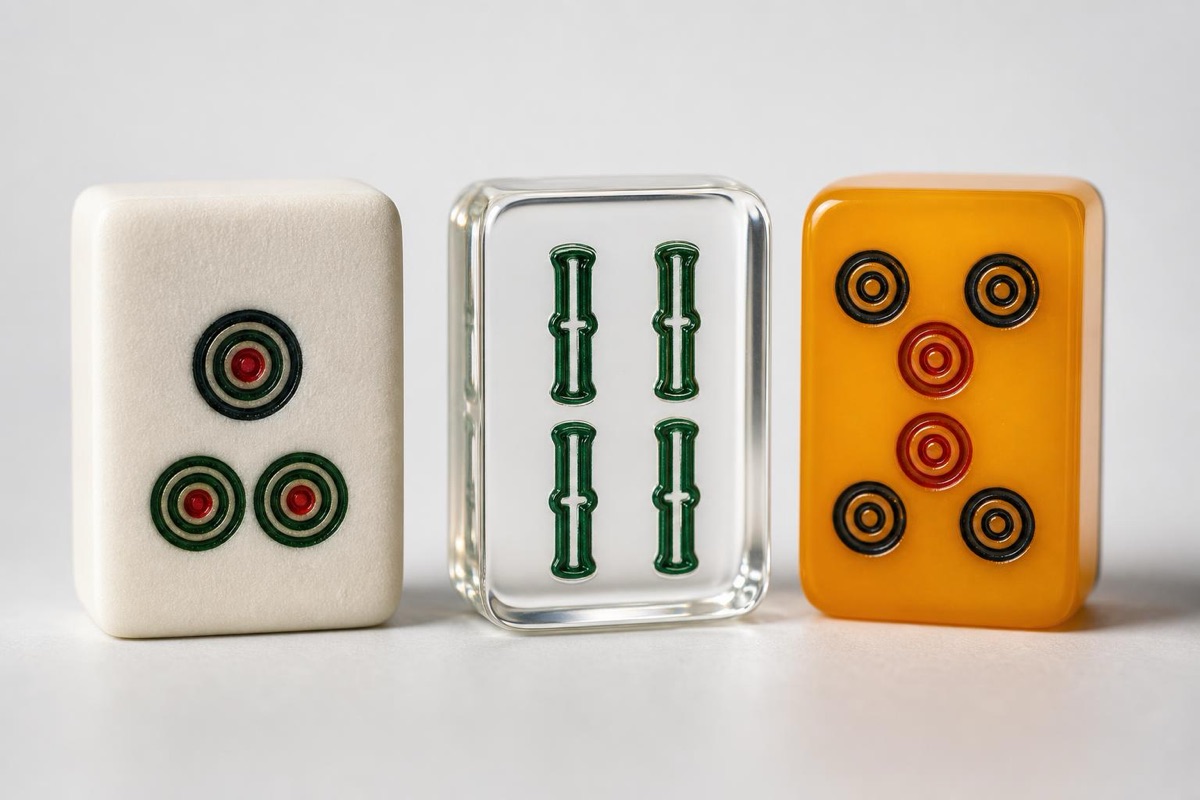
Quick Answer
Acrylic tiles usually produce a bright, clean, high-frequency click with short decay, while classic urea-resin tiles sound deeper and warmer with more resonance. Melamine and lower-cost polyester-based materials tend to sound flatter or duller, which is why experienced buyers often use the shuffle sound as a quick quality check.
The Sound That Defines Quality
Ask an experienced player what separates a premium set from a forgettable one, and many will talk about the sound before they talk about color, weight, or packaging. The acoustic response during shuffling, stacking, and discarding shapes how “premium” a set feels in real use.
That click is a physical result of three factors working together: density, hardness, and internal damping. Materials that are dense enough to carry impact energy, rigid enough to create a distinct contact note, and consistent enough to avoid dead spots usually sound better in play.
How Different Tile Materials Sound
| Material | Typical Acoustic Character | What Buyers Notice |
|---|---|---|
| PMMA acrylic | Bright, crisp click with short decay | Clean modern sound, balanced feel, broad commercial appeal |
| Urea-formaldehyde resin | Deeper, warmer click with longer resonance | Traditional premium feel, heavier impression, more brittle behavior |
| Melamine-formaldehyde | Harder but slightly flatter note | Scratch resistance can be good, but the sound is often less distinctive |
| Polyester-based resin blends | Muted thud or bland rattle | Lower perceived quality when compared side by side |
PMMA Acrylic
Acrylic commonly delivers the most recognizable modern American Mahjong click: bright, clear, and controlled. The note stops cleanly rather than ringing for too long, which makes the shuffle sound energetic without becoming messy. That balance is one reason high-gloss acrylic remains a popular premium choice.
Traditional Urea Resin
Classic urea-resin tiles are known for a heavier, more resonant sound. Many players describe the note as warmer and more luxurious. The tradeoff is that this material family is generally less forgiving under impact and can be more prone to cracking or yellowing over time.
Melamine
Melamine-based tiles can feel hard and durable, but the sound is often less emotionally satisfying. Compared with acrylic or classic urea resin, the click tends to be flatter, which is why buyers may perceive the set as less premium even when the finish looks acceptable at first glance.
Polyester-Based “Resin” Blends
When sellers use the word “resin” broadly, the underlying material may vary. Lower-cost polyester-heavy blends often produce the dullest acoustic result, especially during a full-table shuffle. If the tiles sound more like a generic rattle than a layered click, buyers usually feel the difference immediately.
The Shuffle Test Matters More Than One Tap
Single-tile tapping is useful, but the full shuffle is a better real-world test. During washing, all tiles collide across the table in rapid succession. Premium acrylic often sounds lively and individually articulated, while classic resin sounds deeper and more rounded. Lower-grade materials tend to blur together into a flat, textureless noise.
That full-table sound matters because players experience it repeatedly in every session. A set that photographs well but sounds dull can still feel disappointing after a few games.
Weight and Sound Are Related, Not Identical
Heavier tiles often sound richer because more mass can transfer more energy at impact, but weight alone does not guarantee a better click. Two tiles with similar dimensions can sound very different if their internal structure, hardness, or density consistency differs.
For buyers, the useful rule is simple: evaluate density quality rather than chasing weight for its own sake. A balanced acrylic tile can sound noticeably more premium than a heavier but poorly controlled lower-cost blend.
Reviewing tile materials for a custom or wholesale project?
Lucky Mahjong helps buyers compare acrylic, melamine, and other material directions alongside tile count, engraving quality, accessory fit, and packaging requirements before sample approval.
Request a Wholesale QuoteThree Questions About Tile Sound and Material
Can I judge tile quality by sound alone without knowing the material?
Sound is a fast and useful filter, but it should be paired with visual and tactile checks. Consistent translucency, clean edge finishing, stable engraving, and balanced tile weight help confirm what the ear is suggesting.
Does engraving depth affect the tile's sound?
Only slightly. Normal engraving depth removes a small amount of material relative to the overall tile body, so the acoustic effect is limited. Deeper engraving changes tactile feel much more than it changes the click.
Do tile racks and pushers affect how the tiles sound during play?
Yes. Acrylic racks, wooden racks, felt surfaces, and hard tabletops all change the overall soundscape. Players hear the whole system, not just the tile body, so accessories and playing surface should be considered part of the sensory experience.