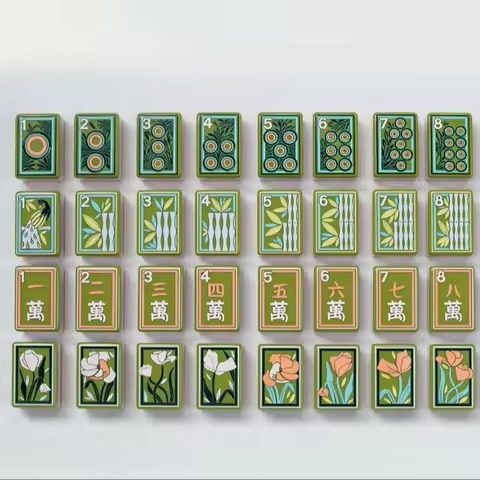
Quick Answer
Premium Mahjong acrylic is typically PMMA, a high-clarity material with strong edge glow, stable weight, a crisp click, polished finishing, and good UV resistance. Budget "acrylic" products are often PS, ABS, or blended plastics that look flatter, weigh less, sound duller, and yellow sooner.
The fastest way to judge quality is to check translucency, tile weight, sound, edge finish, and UV stability rather than trusting labels like "crystal acrylic" or "premium resin."
The term acrylic gets used loosely across marketplace listings, boutique product pages, and wholesale catalogs. That creates confusion for buyers comparing tile feel, long-term durability, and real value. If you understand what separates true PMMA from lower-grade substitutes, you can evaluate a set much more confidently before buying.
Not All Acrylic Is Created Equal
In the premium segment, Mahjong tiles are usually made from PMMA, or polymethyl methacrylate. PMMA is valued for optical clarity, rigidity, and stable surface finishing. It is the same general material family used in retail fixtures, protective display covers, and other applications where clarity matters.
At the lower end of the market, many tiles marketed as acrylic are actually polystyrene, ABS, or resin-heavy blends that include some acrylic content but do not deliver the same visual depth or structural feel. They may still be playable, but they do not behave like premium PMMA in the hand or over time.
Reference point: PMMA is known for approximately 92% visible-light transmission, which helps explain the cleaner edge glow and brighter internal translucency buyers notice on premium tiles.
The Material Science
PMMA is a transparent thermoplastic with strong optical clarity and predictable finishing behavior. In Mahjong production, that means the tile can hold a cleaner polished edge, reflect light more evenly, and show more depth through the face and sides.
Budget plastics often lose that effect. Instead of a soft inner glow, the tile looks milky or flat. Instead of a crisp, resonant sound, you get a duller tap. Instead of a clean polished perimeter, you often see mold lines, roughness, or tiny bubbles near the edge.
The Five-Point Quality Test
1. Translucency Test
Hold the tile toward a direct light source. Premium PMMA usually produces a soft internal glow, especially around the edges. Lower-grade plastic looks more opaque, cloudy, or dead under the same lighting.
2. Weight Test
For a 30 mm × 23 mm × 16 mm tile, premium PMMA generally lands around 14 to 16 grams. Budget plastic is more commonly 8 to 12 grams, either because of lower density, lower-grade material, or looser construction.
3. Sound Test
When two premium PMMA tiles meet, the sound is usually clearer and more resonant. Budget tiles sound flatter and duller. For experienced players, this is often one of the fastest sensory cues.
4. Edge Finish Test
Look closely at the tile perimeter. Premium acrylic typically has smooth, uniform, polished edges with a slightly glossy finish. Lower-grade tiles often show visible mold seams, rough sections, or tiny internal imperfections.
5. UV Stability Test
PMMA is known for strong long-term color stability and resistance to yellowing compared with cheaper plastic blends. Budget materials may yellow or become brittle within roughly 6 to 18 months of visible-light and storage exposure, depending on pigment, environment, and formulation quality.
| Quality Signal | Premium PMMA Acrylic | Budget Plastic / Blend |
|---|---|---|
| Light behavior | Clear edge glow, visible depth | Milky, opaque, or flat |
| Typical tile weight | 14-16 g | 8-12 g |
| Sound | Crisp, resonant click | Dull, flatter tap |
| Edge finishing | Uniform polished edges | Mold lines, rough spots, bubbles |
| Long-term stability | Better UV resistance | Higher yellowing risk |
Common Deceptive Marketing Practices
Terms like "crystal acrylic," "premium resin," and "hand-polished" sound specific, but they are not standardized technical labels. They can describe excellent products, average products, or cheap products with equally vague confidence.
The better question is simple: what material is this tile actually made from? A trustworthy supplier should be comfortable stating whether the tile is PMMA, melamine, resin, ABS blend, or something else. If the answer stays fuzzy, treat that as a quality signal in itself.
Price-to-Quality Mapping
Price does not guarantee quality, but it often tells you where to start asking sharper questions.
Almost certainly not premium PMMA.
Possible quality variation. Use the five-point test carefully.
Often the best-value PMMA segment.
Usually paying for design, exclusivity, and presentation beyond the base material.
Three Questions Buyers Ask
Is PMMA worth the premium over melamine?
For regular players, usually yes. A better tile feel, stronger visual clarity, and longer-lasting appearance often justify the difference. Spread over years of weekly use, the cost gap per session is usually small.
Can I identify PMMA from online product photos?
Sometimes. Look for edge glow, translucency, and posted weight specifications. But the most reliable approach is still buying from a supplier who explicitly states 100% virgin PMMA and can provide a sample tile or close-up process proof.
Does tile color affect acrylic durability?
No meaningful durability penalty comes from color itself when pigment is added correctly during manufacturing. Very dark shades can show scratches more clearly, but that is a visibility issue rather than a structural one.
Use Better Material Signals
If you are sourcing for a boutique, a private-label launch, or a premium gift program, ask suppliers for tile weight, material declaration, edge-closeup photos, and a sample before you compare quotes only by price.
Request a Quote