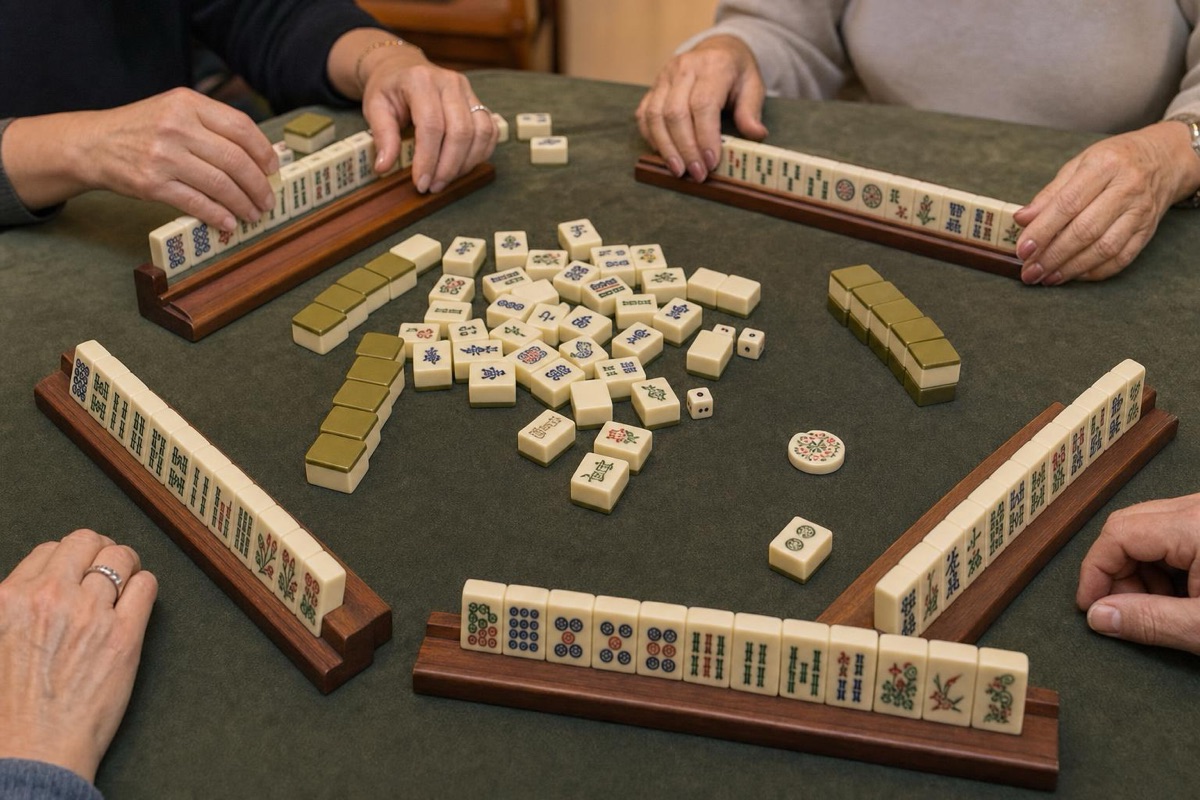
You just bought your first American Mahjong set. You unbox it, admire the beautiful tiles, and then it hits you—there are no rules inside. No instruction booklet. No winning hand guide. Just tiles, racks, and a whole lot of questions.
If this sounds familiar, you're not alone. Thousands of new players experience the exact same confusion every year. The missing piece isn't a flaw in your set—it's the NMJL card, the official rule book that every American Mahjong player relies on.
In this guide, we'll break down exactly what the NMJL card is, how to read it, why it changes every year, and why it's the single most important purchase you'll make after your tile set. Whether you're picking up American Mahjong for the first time or you've played a few games and still feel lost staring at the card, this article is for you.
What Is the NMJL?
The National Mah Jongg League (NMJL) is the sole official governing body for American Mahjong. Founded in 1937, the NMJL has been the authority on American Mahjong rules for nearly 90 years.
Here's what makes the NMJL unique:
- It is the only organization that writes the official rules for American Mahjong in the United States.
- It publishes the annual hands card that defines every legal winning combination.
- Approximately 500,000 active players across the United States use NMJL rules, making it the dominant standard for American Mahjong.
- You can learn more about the organization at nationalmahjonggleague.org.
If you're playing American Mahjong in the United States, chances are overwhelming that you're playing by NMJL rules. And that means you need the card.
What Is the NMJL Card?
The NMJL card—officially called the Standard Hands and Rules Card—is an annual reference card that lists every legal winning combination for that year's American Mahjong games. Think of it as the official playbook: if your completed hand doesn't match one of the patterns on the card, it doesn't win. Period.
Key Facts About the Card
- Published annually in April, valid from that year through March of the following year.
- Lists 50–60+ winning hand patterns, organized into themed sections.
- Each hand consists of exactly 14 tiles (the standard American Mahjong hand size).
- Costs approximately $8–15, depending on the version you choose.
- Sold directly through the NMJL website and select retailers.
The Card Structure
The card is organized into clearly labeled sections, each containing multiple hand patterns. While the exact sections vary from year to year, here are the categories you'll typically find on the card:
- Year section (e.g., "2026") — hands that incorporate the digits of the current year
- 2468 — hands using only even numbers
- Any Like Numbers — hands where all number groups use the same value
- Quints — hands that include five identical tiles (requiring Joker substitutions)
- Consecutive Runs — hands built on sequential number runs
- 13579 — hands using only odd numbers
- Winds & Dragons — hands focused on honor tiles (winds and dragons)
- 369 — hands built around the numbers 3, 6, and 9
- Singles and Pairs — hands composed entirely of singles and pairs
Each section contains multiple rows of hand patterns. Within a row, the numbers and symbols tell you exactly which tiles you need, and the point values tell you how much each hand is worth when you win.
How to Read the NMJL Card
Reading the NMJL card is the most important skill a new American Mahjong player can develop. It looks intimidating at first—a dense grid of numbers, letters, and colors—but once you understand the basics, it becomes second nature.
Tile Symbols and Abbreviations
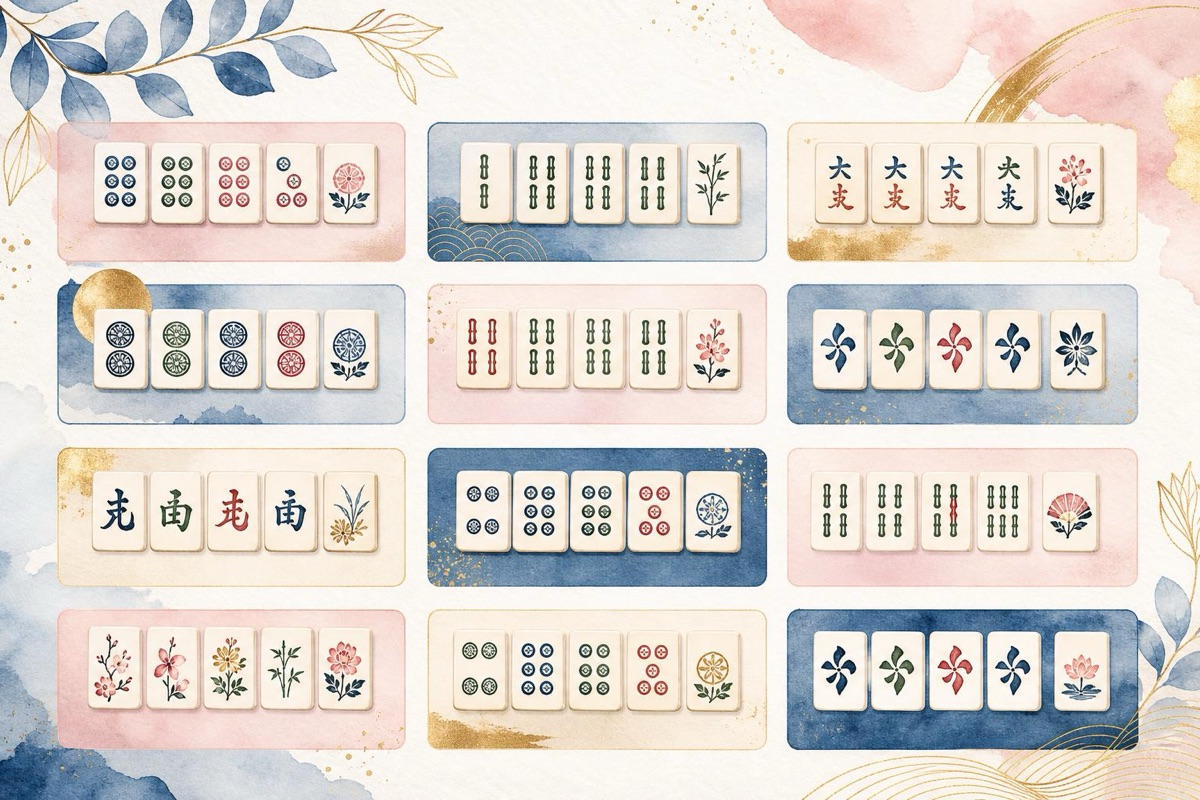
The card uses a standardized set of abbreviations to represent different tile types:
| Symbol | Meaning |
|---|---|
| 1–9 | Numbered tiles in any of the three suits (Bams, Craks, or Dots) |
| D | Dragon tile (context determines if it means a specific dragon or is used as a directional indicator) |
| F | Flower tile |
| N, E, W, S | Wind tiles — North, East, West, South |
| 0 | Soap (the White Dragon, which appears as a blank or "0" tile) |
| R, G, Bl | Red Dragon, Green Dragon, Blue Dragon (Soap/White Dragon) |
Tile Combinations
Hands are built from different groupings of tiles. Here are the standard combinations you'll see on the card:
| Term | Number of Tiles | Example | Description |
|---|---|---|---|
| Single | 1 | 1 | One individual tile |
| Pair | 2 | 22 | Two identical tiles |
| Pung | 3 | 333 | Three identical tiles |
| Kong | 4 | 4444 | Four identical tiles |
| Quint | 5 | 55555 | Five identical tiles (always requires at least one Joker) |
| Sextet | 6 | FFFFFF | Six identical tiles (always requires Jokers) |
A quint (five of a kind) is only possible because American Mahjong sets include 8 Joker tiles, which serve as wild tiles that can substitute for any tile in a winning hand. Without Jokers, you could never collect five identical tiles—there are only four of each tile in the set.
The Color System
The color-coding on the card is one of the most misunderstood elements, and getting it wrong is one of the most common beginner mistakes. Here's the critical rule:
Instead, the colors indicate suit relationships within a hand:
- Same color = those tiles must all be from the same suit
- Different colors = those tile groups must be from different suits
This means you get to choose which suit each color represents. If a hand shows blue 111 and red 222, you could make the blue tiles Craks and the red tiles Bams—or any other combination, as long as the same-color tiles stay in the same suit and different-color tiles use different suits.
Dragon Color Associations
There's one important exception to the color rule: Dragon tiles have fixed suit associations.
- Green Dragon pairs with Bams
- Red Dragon pairs with Craks
- Soap (White Dragon) pairs with Dots
When a hand shows a dragon next to numbered tiles, the dragon's color may determine whether the hand requires the "matching" or "opposite" dragon. An Opposite Dragon situation occurs when the dragon shown is a different color from the numbered tile group—meaning the dragon's fixed suit doesn't match the suit of the number group it's paired with. Pay attention to these footnotes, as they can change the entire strategy for a hand.
Point Values and Concealed Hands
Every hand on the card has a point value (typically 25, 30, 35, 40, 50, or higher) that reflects its difficulty. Harder hands are worth more points.
Some hands are marked with a "C" after the point value, which stands for Concealed. A concealed hand must be played without calling (claiming) any tiles from other players' discards. Concealed hands are more challenging but reward you with higher point values. If there's no "C," the hand can be played either exposed (with called tiles) or concealed.
Section Overview (2026 Card)
For the 2026 NMJL card, here's what each major section focuses on:
- 2026: Hands using the digits 2, 0, 2, 6. The "0" typically represents the Soap (White Dragon). These are often a great starting point for beginners.
- 2468: Even-numbered tile combinations only. No odd numbers allowed.
- Any Like Numbers: All numbered groups in the hand must use the same number value (e.g., all 3s, all 7s).
- Quints: Every hand in this section includes at least one group of five identical tiles, requiring Joker usage.
- Consecutive Runs: Sequential number runs like 3-4-5-6-7, sometimes spanning multiple suits.
- 13579: Odd-numbered tile combinations only. No even numbers allowed.
- Winds & Dragons: Combinations built primarily from wind tiles (N, E, W, S) and dragon tiles.
- 369: Hands where tile values include 3, 6, and/or 9 in various configurations.
- Singles and Pairs: The most challenging section—hands built from individual tiles and pairs rather than pungs or kongs.
Why Does the Card Change Every Year?
One of the most distinctive features of American Mahjong is that the winning hands change every single year. The NMJL releases a new card every April, and the old card becomes invalid.
There are several reasons for this annual refresh:
- Keeps the game fresh. If the same hands were used year after year, experienced players would memorize the optimal strategies, and the game would become predictable. The annual change ensures that every player—whether you've been playing for 30 years or 30 days—faces a new strategic puzzle each spring.
- Prevents memorization from dominating. While experienced players do develop faster card-reading skills, the changing card means nobody can simply "coast" on memorized knowledge.
- Balances hand difficulty. The NMJL carefully designs each year's card to offer a mix of easy, moderate, and difficult hands across all sections. This ensures that beginners have accessible entry points while advanced players have challenging options.
- Creates excitement around the release. April has become an unofficial holiday in the American Mahjong community. Players gather to unbox the new card together, discuss which hands look "hot" or "cold," and debate strategy for the coming year.
The April release also coincides with a peak buying season for new Mahjong sets, making it a great time to purchase your first set or upgrade to an NMJL-compliant one.
Do I Need the Card to Play?
Yes—absolutely.
In American Mahjong, the NMJL card defines every legal winning hand. Without the card, you have no way of knowing which combinations are valid winners. It's like trying to play poker without knowing what beats what.
Here's what you need to know:
- 99% of American Mahjong games in the United States use NMJL rules and require the current year's card.
- The card is not included with any tile set—you must purchase it separately.
- Each player at the table typically needs their own copy of the card for reference during the game.
- Playing with an expired card (from a previous year) will result in invalid hands and frustrated tablemates.
If someone invites you to play American Mahjong, the first question you should ask is: "Which year's card are we using?" The answer should always be the current year.
How to Buy the NMJL Card
Purchasing the NMJL card is straightforward:
- Visit the official website: nationalmahjonggleague.org
- Navigate to the card order section of the site.
- Choose your version:
- Standard card — the classic pocket-sized reference card.
- Large print card — same content with enlarged text, highly recommended for players who prefer easier reading.
- Laminated version — a durable, wipe-clean option that lasts longer with regular use.
- Complete your purchase. The card typically costs between $8 and $15, plus shipping.
Timing Your Purchase
The new card is released each April. If you're buying in January through March, you'll receive the previous year's card (which remains valid through March of the new year). Starting in April, you'll receive the new card.
If you're just getting started, it's worth checking the release date so you don't accidentally buy a card that's about to expire.
How the Card Affects Your Set Choice
Here's a critical point that catches many beginners off guard: not every Mahjong set works with the NMJL card.
To play American Mahjong with the NMJL card, your tile set must meet specific requirements:
Essential Requirements for an NMJL-Compatible Set
- 166 tiles total, including:
- 152 standard tiles (suits, winds, dragons, flowers)
- 8 Joker tiles (essential for Quint and Sextet hands)
- Clear Joker identification — Jokers must be visually distinct from regular tiles
- Arabic numerals and English letters on the tile faces for easy card reference
- Standard tile dimensions compatible with commonly available racks
- All three suits represented: Bams (bamboo), Craks (characters), and Dots (circles)
What Happens With a Non-Compliant Set?
- Missing Jokers = impossible to complete Quint or Sextet hands = many card sections become unavailable
- Chinese-only markings = difficult to match tiles to the card quickly
- Wrong tile count = you may not have enough tiles to complete certain hand patterns
- No Soap (White Dragon) tile = year hands and other patterns become unplayable
Before purchasing any American Mahjong set, always verify that it's NMJL-compliant. A non-compliant set is essentially useless for American Mahjong, regardless of how attractive it looks.
For a detailed breakdown of what to look for, check out our American Mahjong Buyer's Guide and our article on NMJL compliance.
Learning the Card: Tips for Beginners
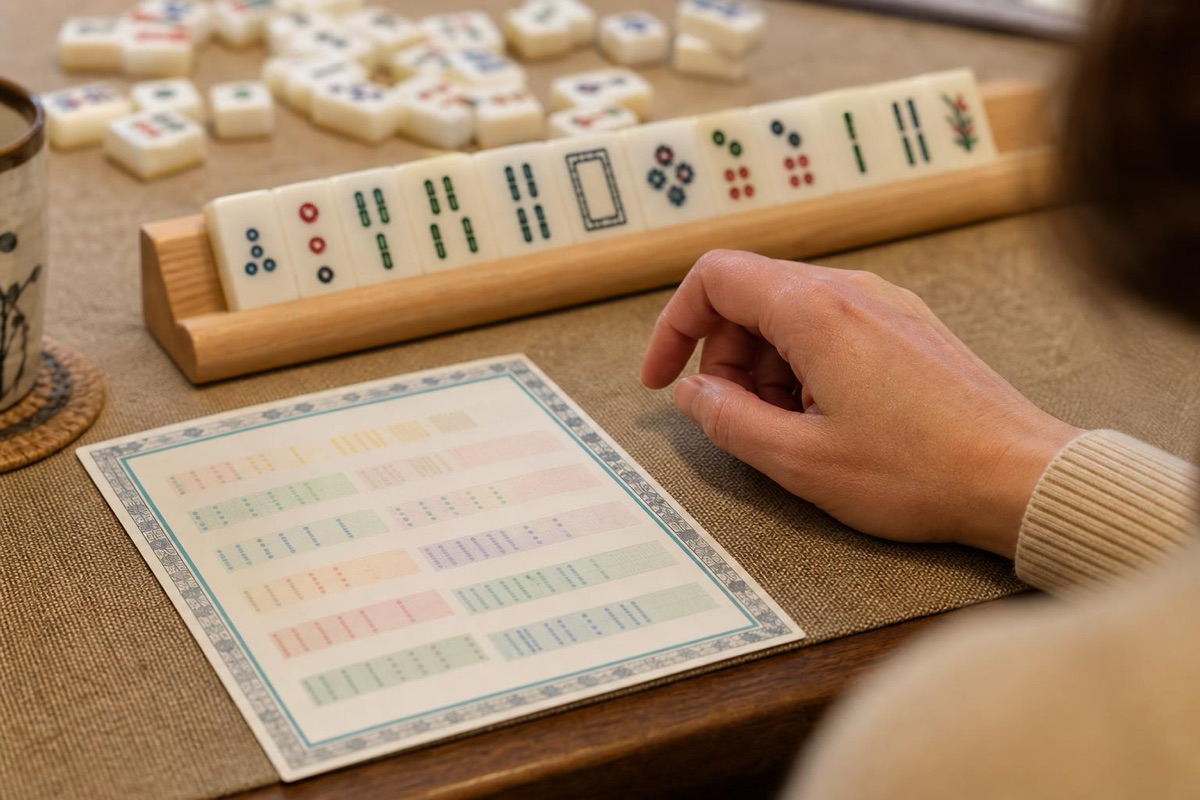
Here's the good news: you do not need to memorize the card. Even the most experienced players reference the card during every game. The goal isn't to commit every hand to memory—it's to become comfortable enough with the card's structure that you can quickly identify viable hands based on your initial tile draw.
Practical Tips for New Players
- Start with one or two sections. Don't try to learn the entire card at once. Pick the sections that feel most intuitive (the Year section and Consecutive Runs are popular starting points) and focus on those during your first few games.
- Use color-coding to help you navigate. Highlight or mark your favorite sections with a colored tab. This makes it faster to find your target hands during gameplay.
- Practice card-reading outside of games. Spend 10–15 minutes a day just looking at the card and mentally building hands. Over time, you'll start recognizing patterns more quickly.
- Use a mobile app for quick reference. Several apps offer digital versions of the current NMJL card. These can be faster to search than a physical card, especially when you're learning.
- Join a Mahjong club or group. Playing with experienced players is the fastest way to learn. Most clubs welcome beginners and are happy to explain card mechanics during games. The social aspect also makes the learning process much more enjoyable.
- Don't panic during the Charleston. The Charleston (the tile-passing phase at the start of each game) is your opportunity to shape your hand. Use it strategically to collect tiles that match one of your target patterns.
- Always have a backup hand. Experienced players typically identify a primary target hand and one or two backups before settling into gameplay. If your primary hand becomes impossible (because someone else took the tiles you needed), you can pivot to your backup without losing a turn.
Frequently Asked Questions
1. What Is the NMJL Card?
The NMJL card is the official annual reference card published by the National Mah Jongg League that lists every legal winning hand combination for American Mahjong. Without it, you cannot determine which hands win.
2. Do I Need to Buy the NMJL Card Separately?
Yes. The NMJL card is never included with a Mahjong tile set. It must be purchased separately, either through the NMJL website or authorized retailers.
3. How Much Does the NMJL Card Cost?
The NMJL card typically costs between $8 and $15, depending on whether you choose the standard, large print, or laminated version.
4. How Often Does the NMJL Card Change?
The NMJL card changes every year. A new card is released each April and remains valid through March of the following year.
5. Can I Play American Mahjong Without the NMJL Card?
Technically yes, but practically no. Nearly all American Mahjong games in the United States use NMJL rules. Without the current year's card, you won't know which hands are valid winners, making effective play virtually impossible.
6. How Do I Read the NMJL Card?
Start by learning the basic symbols (1–9 for numbered tiles, F for Flowers, N/E/W/S for winds, 0 for Soap). Then understand that same-colored tiles must be the same suit and different-colored tiles must be different suits. Focus on one section at a time rather than trying to absorb the entire card at once.
7. What Do the Colors on the NMJL Card Mean?
The colors (blue, red, green) indicate suit relationships, not specific suits. Same color = same suit. Different colors = different suits. You choose which actual suit (Bams, Craks, or Dots) each color represents.
8. Where Can I Buy the NMJL Card?
The most reliable source is the official NMJL website. Some Mahjong specialty retailers and clubs also sell cards.
9. Is There a Large Print Version of the NMJL Card?
Yes! The NMJL offers a large print edition with enlarged text and symbols. It's the same content as the standard card, just easier to read—especially helpful during fast-paced games.
10. How Long Does It Take to Learn the NMJL Card?
You don't need to memorize the card, but most players start feeling comfortable reading it after 5–10 games. Within a few months of regular play, you'll be able to scan the card quickly and identify viable hands in seconds. Full pattern familiarity typically develops over a year of consistent play.
Conclusion
The NMJL card is the heart and soul of American Mahjong. It defines the rules, shapes the strategy, and brings hundreds of thousands of players together under a common standard. Understanding the card—knowing how to read it, what the symbols and colors mean, and why it changes every year—is the first and most important step in your American Mahjong journey.
Here's your action plan:
- Get the current year's NMJL card from nationalmahjonggleague.org.
- Make sure your tile set is NMJL-compliant — 166 tiles, 8 Jokers, Arabic numerals, and English letters. Check our buyer's guide for details.
- Start with one or two sections and build your confidence gradually.
- Find a local Mahjong group or club — there's no substitute for playing with others.
Ready to get started? Browse our NMJL-compliant American Mahjong sets and pair your new set with the official card. Your American Mahjong adventure begins with these two essentials.