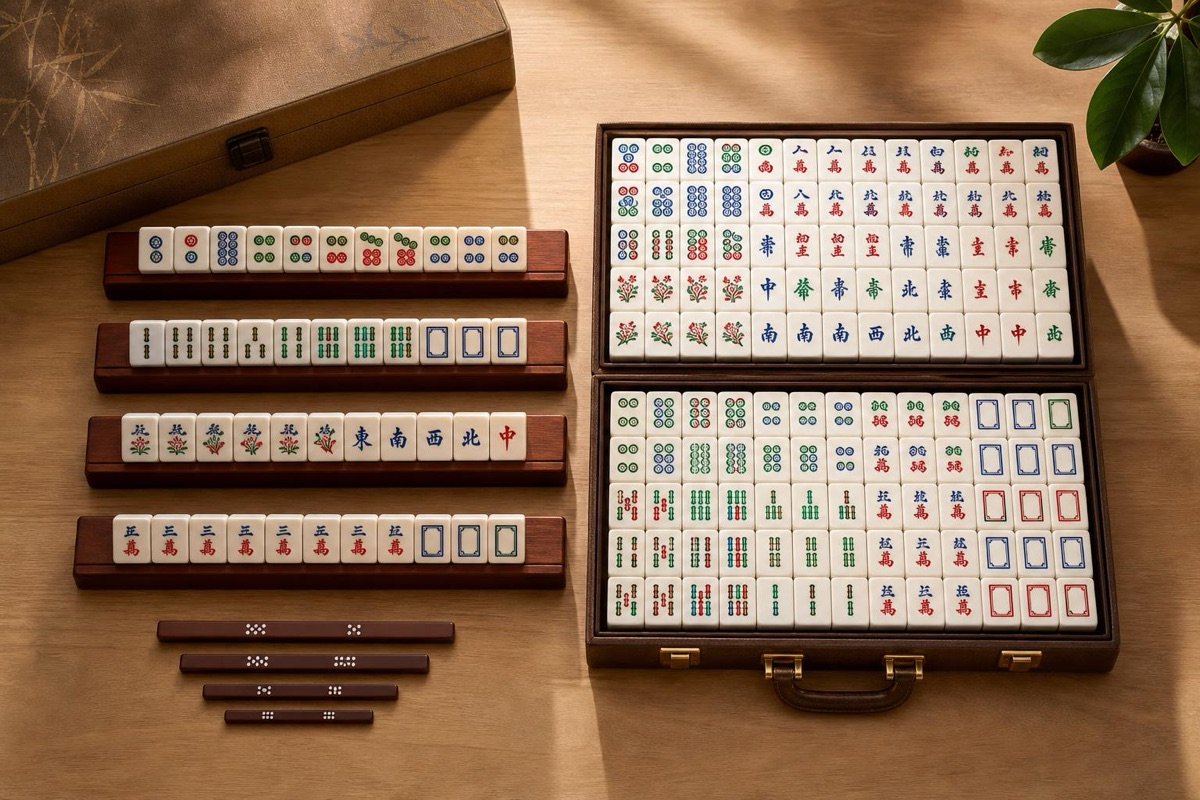
American mahjong is having its biggest moment in decades. From neighborhood game nights to senior living communities and trendy social clubs, the clatter of tiles is echoing across the United States like never before. If you're reading this, you're probably one of the hundreds of thousands of Americans who've caught the mahjong bug—or you're shopping for someone who has. Either way, you're in the right place.
The challenge? The American mahjong market is flooded with options, and a wrong purchase can mean wasted money, frustrating game nights, and tiles that don't even meet the official rules of the game. This guide covers every factor that matters—materials, price ranges, NMJL compliance, sizing, and more—so you can buy with confidence and start playing right away.
American Mahjong vs. Chinese Mahjong: The Complete Breakdown
Before you buy anything, you need to understand a fundamental distinction that trips up thousands of shoppers every year: American mahjong and Chinese mahjong are not the same game.
Yes, they share ancient roots. Yes, they both involve building sets of matching tiles. But the differences are significant enough that buying the wrong type of set will ruin your experience.
Tile count is the biggest difference. A standard American mahjong set contains 166 tiles: 152 standard tiles across suits and honor tiles, plus 8 Joker tiles that are unique to the American game. A Chinese mahjong set contains only 144 tiles and has zero Jokers. Those 8 extra tiles aren't optional accessories—they're essential to American gameplay, especially when calling for discards using the "Quint" and "Sextet" hand patterns listed on the annual NMJL card.
The annual rule card is another major difference. American mahjong is governed by the National Mah Jongg League (NMJL), which publishes a new official hands card every year. If you're playing American mahjong, you must have the current year's NMJL card—it determines which hand combinations are valid. Chinese mahjong has no such annual governing body or card; the rules are traditional and relatively fixed.
Tile labeling follows different conventions. American mahjong tiles use Western markings: Arabic numerals, English letters (like "N," "E," "S," "W" for winds), and sometimes "Red," "Green," and "Blue" for dragon tiles. This makes American sets accessible to players who don't read Chinese characters. Chinese mahjong tiles are marked entirely in Chinese characters, which can be a barrier for American players who didn't grow up reading them.
Accessories differ too. American mahjong is almost always played with racks (individual tile trays) and pushers (flat paddle-like devices that help you organize and reveal your hand). These are not standard in Chinese mahjong, where players typically build walls directly on the table surface.
Can you use one set to play the other? An American mahjong set can technically be used for Chinese mahjong because it has more tiles—you'd simply remove the Jokers and extras. However, the reverse is impossible: a Chinese set with only 144 tiles is missing the 8 Jokers required for American play. So if you play American mahjong, always buy an American set.
What Should Be in a Standard American Mahjong Set?
Not all "American mahjong sets" on the market actually include everything you need. Some budget sets cut corners, leaving out essential components. Here's your definitive checklist:
The Tiles (166 minimum)
- 152 standard tiles: These include the three suits (Craks/Dots/Bams in values 1 through 9, with four copies of each = 108 tiles), plus Honor tiles (4 each of North, East, South, West winds = 16 tiles, and 4 each of Red, Green, and Blue dragons = 12 tiles), plus 8 Flower tiles (4 Seasons and 4 Flowers, labeled numerically). That totals 144 standard tiles.
- 8 Joker tiles: Absolutely essential for American play. Any set claiming to be "American" without exactly 8 Jokers is non-compliant.
- Optional blank spares (6): Some manufacturers include 6 blank tiles for replacements. This is a nice bonus but not strictly required.
Four Racks (Tile Trays)
Every player needs their own rack—typically a two-piece unit with a flat base and a vertical backrest that holds tiles upright during play. Look for racks that feel sturdy and have enough depth (at least 1.5 inches) to stack tiles securely.
Four Pushers
Pushers attach to the front of the racks and slide forward to reveal your hand during the "charleston" (the tile-passing phase at the start of each game). They should be smooth-gliding and wide enough to hold a full hand of 13 tiles.
Dice
Most sets include 2–3 standard six-sided dice. These are used to determine the dealer, break the wall, and choose bonus tiles. While you could use any dice, having them included is expected.
Storage Case or Bag
Your set needs a dedicated storage solution. Common options include soft-sided zippered cases, hard-shell cases with molded inserts, canvas tote bags, and wooden boxes. The best cases have individual compartments that prevent tiles from scratching each other during transport.
Tile Materials Compared: Melamine vs. Acrylic vs. Resin
The material your tiles are made from affects everything: durability, weight, feel, price, and even the quality of the engraving. Here's a detailed comparison of the three most common materials used in American mahjong sets today.
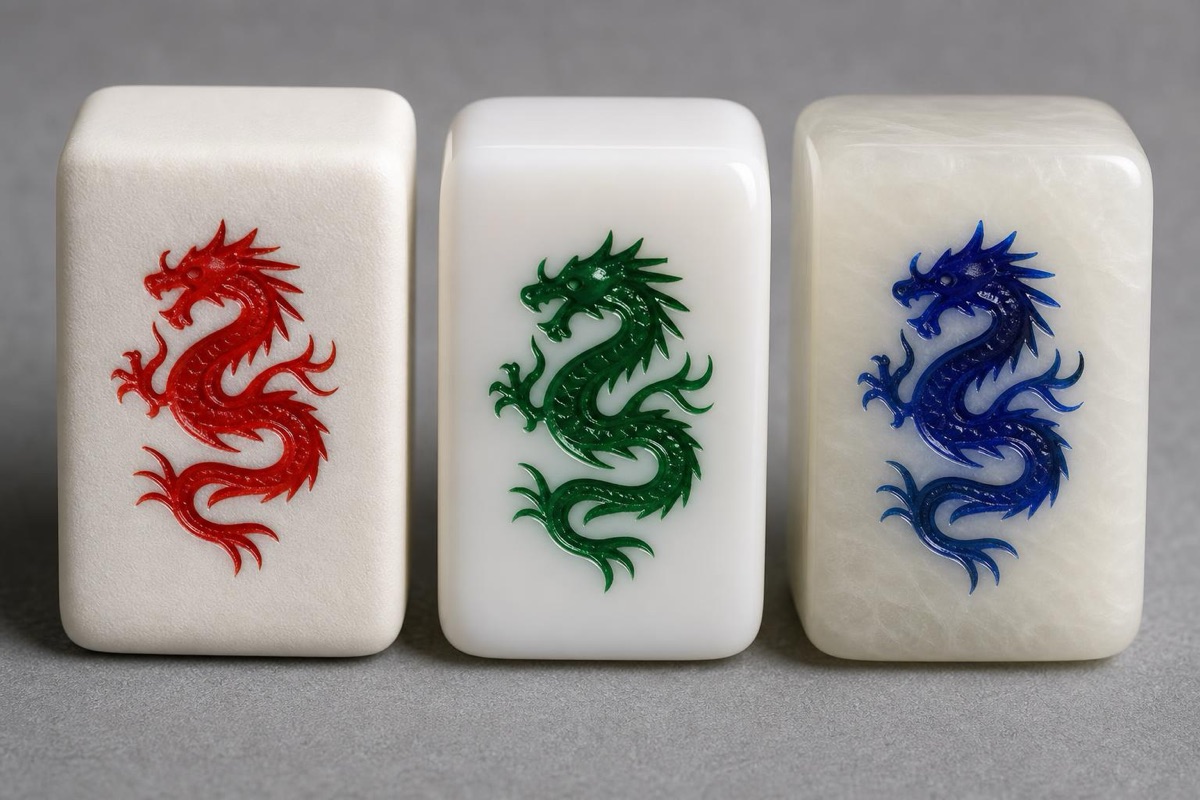
Melamine
Melamine is the workhorse material of the mahjong world. It's a resin-based composite that's pressed and cured under high heat, producing tiles that are dense, scratch-resistant, and extremely durable.
Pros:
- Exceptional durability—melamine tiles can last decades with normal use
- Scratch and chip resistant, ideal for frequent players and club use
- Good weight (heavier than resin, slightly lighter than acrylic) that feels substantial
- Clear, deep engravings that are easy to read
- Best price-to-quality ratio in the market
Cons:
- Slightly more muted appearance compared to the gloss of acrylic
- Limited color and design options
- Heavier than resin, which matters for travel sets
Price range: $75–$150
Best for: Everyday players, beginners, mahjong clubs, and anyone who wants reliable quality without overspending.
Acrylic
Acrylic tiles are the premium option for most American mahjong players. These tiles are cast or injection-molded from clear or colored acrylic resin, often with embedded designs or multi-layered construction that creates a stunning visual effect.
Pros:
- Beautiful, polished appearance with a glass-like finish
- Heavier weight than melamine, which many players prefer for tactile satisfaction
- Exceptional engraving clarity—colors appear vivid and crisp through the clear acrylic
- Available in a wide range of designer colors, patterns, and limited editions
- Often feature UV-printed or embedded designs that don't fade
Cons:
- Higher price point
- More susceptible to scratching than melamine if handled roughly
- Some designer sets have limited availability or long wait times
Price range: $150–$350
Best for: Regular players who want an upgrade, gift buyers, design-conscious players, and anyone willing to invest in a set that doubles as a display piece.
Resin
Resin tiles are lighter and more affordable than both melamine and acrylic. They're made from liquid resin that's poured into molds and cured.
Pros:
- Lightweight and portable—ideal for travel and taking games on the go
- Lower price point makes them accessible for budget-conscious buyers
- Good variety of colors and styles available
- Softer surface can feel pleasant to handle
Cons:
- Less durable than melamine—more prone to chipping and wear over time
- Engravings may be shallower and less defined
- Lighter weight can feel "cheap" to experienced players
- May yellow or discolor with prolonged sun exposure
Price range: $50–$100
Best for: Casual players, travel use, and buyers on a tight budget.
Quick Comparison Table
| Feature | Melamine | Acrylic | Resin |
|---|---|---|---|
| Durability | ★★★★★ | ★★★★☆ | ★★★☆☆ |
| Weight | Medium | Heavy | Light |
| Engraving Quality | ★★★★☆ | ★★★★★ | ★★★☆☆ |
| Aesthetics | ★★★☆☆ | ★★★★★ | ★★★★☆ |
| Value for Money | ★★★★★ | ★★★☆☆ | ★★★★☆ |
| Best Use | Everyday play | Gifts & display | Travel & budget |
Our recommendation: If you play once a week or more, invest in melamine for reliability or acrylic for the premium experience. Save resin for travel sets or occasional casual use. At lukmaj.com, we manufacture melamine and acrylic sets with factory-direct pricing, which means you get the quality of a mid-tier branded set without the markup.
Tile Size & Readability
Tile size might seem like a minor detail, but it has a real impact on gameplay—especially for players with vision difficulties or arthritis. American mahjong tiles come in two main sizes.
Standard Size
- Dimensions: approximately 1.26" × 0.94" × 0.63" (32mm × 24mm × 16mm)
- This is the traditional size and fits virtually all standard racks and pushers on the market. If you're buying your first set, standard size is the safe choice.
Large Size
- Dimensions: approximately 1.4" × 0.94" × 0.63" (36mm × 24mm × 16mm)
- Larger tiles are easier to read and handle, making them popular with senior players and those with visual impairments.
- Important caveat: Large tiles may not fit in standard racks. If you're buying large tiles, confirm that compatible racks are included or available separately.
Engraving vs. Printing
How the symbols are applied to tiles matters for both readability and longevity:
- Engraved tiles: Symbols are physically carved into the tile surface and then filled with paint or pigment. Engravings last the life of the tile and remain legible even after years of use. This is the preferred method for quality sets.
- Printed tiles: Symbols are applied as a surface layer using ink or UV printing. These can look crisp initially but may fade or wear off over time, especially with frequent handling. Printed tiles are common on budget sets.
Joker Readability
In American mahjong, Jokers are among the most-used tiles—they're called for substitutions in countless hand patterns. Your set's Jokers must be immediately distinguishable at a glance. Look for high-contrast markings (bright red or bold designs) on a contrasting background. If the Jokers blend in with regular tiles from across the table, it creates confusion during fast-paced games.
Price Guide: What to Expect at Every Budget
Understanding the American mahjong set market means understanding how price correlates with quality, materials, and included accessories. Here's a realistic breakdown of what your money gets you at each tier.
| Price Range | What You Get | Best For | Top Brands |
|---|---|---|---|
| $75–$150 | Melamine tiles, basic carrying case, standard racks and pushers, included dice | Beginners, casual players, gift on a budget | Yellow Mountain Imports, Metro Mah Jongg |
| $150–$275 | Premium melamine or entry-level acrylic, deeper engravings, improved cases with compartments, upgraded accessories | Regular club players (1–2× per week) | Linda Li, AMAHJ |
| $275–$500 | Premium acrylic with designer aesthetics, exclusive colorways, display-quality packaging, matching accessories | Serious players, design lovers, premium gift buyers | Oh My Mahjong, The Mahjong Line |
| $500+ | Collector-grade materials, complete accessory kits, heirloom-quality craftsmanship, limited editions | Collectors, milestone gifts, luxury buyers | Premium OEM/Custom makers |
The Sweet Spot: $100–$150
For the vast majority of first-time buyers, the $100–$150 range offers the best value. At this price point, you get a complete NMJL-compliant set with durable melamine tiles, functional racks and pushers, and a decent storage case. These sets will last for years and provide an excellent introduction to the game.
When to Invest in Premium
Consider spending $200 or more when:
- You play two or more times per week and want tiles that feel luxurious in hand
- You're buying a gift where presentation and "wow factor" matter
- You play with a group that appreciates matching or designer sets
- You want a set that doubles as a decorative display piece
When to Stay Budget-Friendly
Keep your spending under $100 when:
- You're not sure yet if American mahjong is for you
- The set is primarily for travel or occasional use
- You're buying multiple sets for a club or group
NMJL Compliance: Why It Matters
If you're playing American mahjong in the United States, the National Mah Jongg League (NMJL) is the governing body that defines the rules. Approximately 99% of American mahjong players follow NMJL rules, which means NMJL compliance isn't optional—it's essential.
The Annual NMJL Card
Every year, the NMJL publishes a new Standard Hands Card that lists all valid hand combinations for that year. The card typically costs around $8–$15 and is not included with any mahjong set. You must purchase it separately, either through the NMJL website or authorized resellers. Think of it like buying a new rules expansion for your favorite board game—it changes every year, and playing with last year's card is like using an outdated map.
NMJL Compliance Checklist
Before buying any American mahjong set, verify these requirements:
- ✅ 166 tiles minimum (152 standard + 8 Jokers; additional blanks are fine)
- ✅ Exactly 8 Joker tiles that are clearly and distinctly marked
- ✅ Standard or large tile sizes that fit regulation racks
- ✅ Clear, legible markings on all tiles (including suit names, numbers, and honor tile labels)
- ✅ Western labeling (Arabic numerals, English letters)
If a set fails any of these checks, you may encounter problems during sanctioned games or club play. Non-compliant sets can lead to disputes, awkward game stoppages, and ultimately a return or exchange—a hassle nobody wants.
Why Most Budget Sets on Amazon Fail This Test
Many ultra-cheap sets (under $60) advertised as "American mahjong" on online marketplaces are actually Chinese mahjong sets repackaged with misleading titles. They typically have only 144 tiles, no Jokers, and Chinese character markings. Always verify the tile count and included components before purchasing from third-party sellers.
Who Should Buy What? A Buyer's Guide by Player Type
Not every player has the same needs. Here are our tailored recommendations based on who's buying and why.
Complete Beginner
Budget: $100–$150 | Material: Melamine | Priority: Full accessories included, NMJL compliant
You're just learning the game and want a reliable set that won't hold you back. Focus on completeness (all 166 tiles, racks, pushers, dice, case) and NMJL compliance. Don't overspend on aesthetics yet—you'll develop preferences as you play more.
Regular Club Player
Budget: $150–$250 | Material: Premium melamine or entry acrylic | Priority: Durability, feel, comfort
If you're playing one to three times per week, you deserve an upgrade. Better materials mean better feel during handling, deeper engravings for faster reading, and sturdier racks that won't wobble. Look for sets with lined cases that protect individual tiles.
Gift Buyer
Budget: $200–$400 | Material: Acrylic | Priority: Presentation, packaging, aesthetics
When mahjong is the gift, the unboxing experience matters as much as the set itself. Look for designer acrylic sets in beautiful packaging, ideally with matching accessories (coordinated racks, pushers, and dice). The recipient will appreciate the thoughtfulness of a premium set.
Senior / Accessibility Needs
Priority: Large tiles, high-contrast markings, easy-to-read Jokers
Look for sets with large-size tiles (1.5"+) and bold, high-contrast engraving or printing. Ensure the included racks accommodate the larger tile size. Some brands specifically market "large print" or "easy-read" sets—these are worth seeking out for players with vision challenges.
Club / Group Buyer (B2B)
Budget: Varies by volume | Priority: Consistency, bulk pricing, durability
Buying for a mahjong club, senior center, or recreation program? Prioritize uniform sets (so all tables match), bulk discounts, and melamine durability that withstands daily use by multiple players. Many manufacturers—including lukmaj.com—offer dedicated B2B pricing for orders of 5+ sets with customization options for branding.
Travel Player
Budget: $50–$100 | Material: Resin | Priority: Compact storage, lightweight
For players who bring their set on cruises, to vacation homes, or to friends' houses, a lightweight travel set with a compact zippered case is ideal. Resin tiles keep the weight down, and soft cases are easier to pack than hard-shell boxes.
Buying from Overseas: What to Know
Many American mahjong sets—regardless of the brand name on the box—are manufactured in China. Understanding the overseas supply chain helps you make smarter purchasing decisions.
Shipping Times
- Direct from China: 10–25 business days via standard shipping, 5–10 days via express (DHL, FedEx, UPS). Longer during peak seasons (Q4 holidays, Chinese New Year).
- From US-based inventory: 2–7 business days. This is the main advantage of buying from domestic retailers or brands that maintain US warehouse stock.
US Warehousing Advantage
Sets stocked in US warehouses offer significantly faster delivery, easier returns, and domestic customer service. If something is wrong with your set, you won't be waiting weeks for a replacement from overseas. At lukmaj.com, we maintain US inventory for our core product lines, combining factory-direct pricing with domestic convenience.
Return Policies Matter
Before buying, check the return window and conditions. Mahjong sets are relatively expensive purchases, and you should have at least 14–30 days to inspect your set and request a return if it's defective, incomplete, or non-compliant. Avoid sellers with "all sales final" policies or no return information.
Unboxing Inspection Checklist
When your set arrives, check the following immediately:
- Tile count: Confirm you have 166 tiles (or more, if blanks are included)
- Joker count: Verify exactly 8 Jokers
- Tile condition: Look for chips, cracks, or misaligned engravings
- Accessories: Confirm all racks, pushers, dice, and case are present and undamaged
- Markings: Check that all tiles have clear, correct Western markings
- Rack fit: Place several tiles on a rack to confirm they fit properly
Document any issues with photos immediately and contact the seller within the return window.
Caring for Your American Mahjong Set
A quality mahjong set is an investment that can last decades with proper care. Here's how to keep your tiles in top condition.
Cleaning
- Routine cleaning: Wipe tiles with a soft, slightly damp cloth. Avoid abrasive cleaners or scouring pads that can damage engravings.
- Deep cleaning: For melamine and acrylic tiles, use mild soap and water with a soft cloth. Dry thoroughly before storing.
- Never soak tiles or submerge them in water—moisture can seep into engraved areas and weaken the paint fill.
Storage
- Store tiles in their designated case with compartments or dividers to prevent scratching.
- Keep the set in a cool, dry place away from direct sunlight.
- Avoid stacking heavy objects on top of the storage case.
What to Avoid
- Direct sunlight and heat: Prolonged UV exposure can fade tile colors and cause resin or melamine to yellow or become brittle.
- Extreme temperatures: Don't leave your set in a hot car or unheated garage. Temperature swings can cause cracking.
- Chemical exposure: Keep tiles away from solvents, acetone, and alcohol-based cleaning products.
With basic care, a melamine set can easily last 15–20+ years, and an acrylic set can last just as long with slightly more attention to surface protection.
Frequently Asked Questions
Can I use an American mahjong set to play Chinese mahjong?
Yes, you can. An American set's 166 tiles include all 144 tiles needed for Chinese mahjong, plus extra Jokers and bonus tiles you'd simply set aside. However, the Western markings (numbers and letters instead of Chinese characters) may be unfamiliar to players accustomed to traditional Chinese sets.
Do I need to buy the NMJL card separately?
Yes. The NMJL Standard Hands Card is sold separately (approximately $8–$15 per year) and is not included with any mahjong set. It's available directly from the National Mah Jongg League website. Without the current year's card, you cannot play standard American mahjong.
How many Jokers should an American mahjong set have?
An NMJL-compliant American mahjong set must include exactly 8 Joker tiles. If a set has fewer or more, it's either incomplete, non-compliant, or designed for a variant of the game that doesn't follow standard NMJL rules.
What's the best mahjong set for beginners?
For beginners, a melamine set in the $100–$150 range is ideal. It offers durability, clear engravings, and all necessary accessories without an excessive investment. Focus on NMJL compliance and completeness rather than aesthetics—your preferences will evolve as you gain experience.
Are expensive mahjong sets worth it?
It depends on your use case. For casual or occasional players, a $100–$150 melamine set provides everything needed. However, if you play multiple times per week, value tactile quality and visual beauty, or are buying a meaningful gift, a premium acrylic set ($200+) offers a noticeably superior experience that most frequent players find worthwhile.
Can I customize my mahjong set?
Many manufacturers offer customization options, including custom colors, engraved initials, personalized cases, and even fully custom tile designs for bulk orders. B2B buyers can request branded sets with logos or club names. Check with individual manufacturers—lukmaj.com offers customization for wholesale and group orders.
How long does an American mahjong set last?
With proper care, a quality melamine or acrylic set can last 15–30 years or more. Resin sets typically have a shorter lifespan of 5–10 years due to their softer composition. The most common causes of premature wear are exposure to sunlight, extreme temperatures, and rough handling.
What's the difference between engraved and printed tiles?
Engraved tiles have symbols physically carved into the surface and filled with pigment—these last the lifetime of the tile. Printed tiles have symbols applied as a surface layer using ink or UV printing, which can fade or wear off with frequent handling. Engraved tiles are the standard for quality sets and are strongly preferred for serious play.
Do I need a special table to play American mahjong?
No special table is required. American mahjong is played on any flat surface large enough to build walls (typically a square card table or dining table). However, some players prefer felt-covered tables that reduce tile noise and prevent sliding. Dedicated mahjong tables with built-in tile racks and automatic shufflers exist but are entirely optional and typically cost $200–$2,000+.
How do I know if a set is NMJL compliant?
Check for these requirements: 166+ tiles including exactly 8 Jokers, Western markings (Arabic numerals and English letters), standard or large tile dimensions, and clear, legible engraving on all tiles. If the product listing doesn't explicitly state these specifications—or if the tile count is listed as 144—the set is likely not designed for American mahjong.
Conclusion
Buying an American mahjong set doesn't have to be overwhelming. The key is matching your purchase to your actual needs: a reliable melamine set in the $100–$150 range covers most beginners beautifully, while acrylic sets in the $200–$400 range deliver premium quality for regular players and gift occasions. Above all, ensure your set is NMJL compliant with exactly 166 tiles including 8 Jokers—everything else is secondary.
Remember to check the tile count, verify included accessories, and confirm the return policy before purchasing. Whether you're buying your first set or upgrading to something special, the right American mahjong set will bring years of enjoyment, social connection, and cognitive stimulation to your game nights.
Ready to find your perfect set? Browse our curated collection of NMJL-compliant American mahjong sets — factory-direct quality, transparent materials, and pricing that works for individuals and bulk buyers alike.
New to American mahjong? Check out our beginner's guide to learning American mahjong for rules, strategies, and tips to get started.