Quick Answer
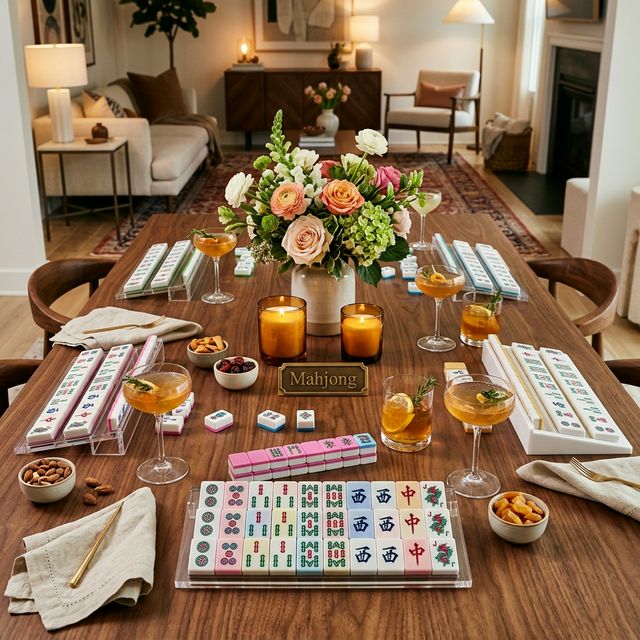
A premium game room should not be a random stack of games. It should use American Mahjong as the centerpiece, then add a strategy game, social deduction game, classic card set, cooperative title, and quick party game so the room can handle different group sizes and moods without losing its visual cohesion.
The Rise of the Dedicated Game Room
Board game culture has shifted from casual storage to intentional display. As more households treat tabletop games as part of their lifestyle and entertaining identity, the game room has become a purpose-designed space rather than a spare cabinet.
American Mahjong naturally fits that shift. It has a strong visual presence, a social four-player format, and enough table ritual to justify a dedicated setup. In a well-planned room, Mahjong becomes both the functional centerpiece and the aesthetic anchor.
The Curation Principle: Complementary, Not Competitive
A curated game room is defined by intentional selection. Each title should serve a different social format, visual mood, and player count so the collection can cover more occasions without redundancy.
Mahjong anchors the room because it serves the classic long-session, four-player gathering. The supporting games should cover the formats Mahjong does not.
Game 1: A Premium Strategy Board Game
For smaller gatherings or couples, a visually refined strategy game covers the shorter-session format. The strongest choices use elevated components such as wooden pieces, cloth bags, or illustrated boards that deserve shelf display rather than hidden storage.
Game 2: A Social Deduction Game
When the guest count rises past Mahjong’s four-player sweet spot, social deduction brings in five to ten players with lighter rules and faster rounds. Premium editions with strong artwork and tactile cards keep the room’s visual language intact.
Game 3: A Classic Card Game Set
A double-deck card set in a leather or wooden case delivers maximum flexibility. Bridge, gin rummy, poker, and other formats all become available through one compact object that still feels elevated enough to leave on display.
Game 4: A Cooperative Game
Mahjong is competitive by nature, so a cooperative title changes the emotional tone of the room. It is especially useful for mixed-experience groups or nights when collaboration feels more comfortable than direct competition.
Game 5: A Quick Party Game
Short-form party games cover the pre-dinner, post-dinner, or warm-up window that a full Mahjong session cannot. The best picks need minimal setup, intuitive rules, and enough replay value to stay on the shelf.
Designing the Physical Space
The table should remain the focal point. A dedicated square Mahjong table in the 40 to 44 inch range, paired with four comfortable chairs and focused overhead lighting, creates the room’s functional center.
Open shelving around the perimeter turns the supporting collection into a display library. Store the most visually appealing faces outward and coordinate the room palette with the primary Mahjong set so the table and shelves feel part of the same design story.
Acoustics matter more than many buyers expect. Tile shuffling can sound harsh in a hard-surfaced room, so rugs, upholstered seating, and soft window treatments help keep the environment comfortable during long play sessions.
Three Questions About Game Room Design
What is a reasonable budget for a dedicated game room?
The premium game collection itself often falls between USD 500 and 1,200. The larger cost driver is the room build: using existing furniture can keep spend low, while a dedicated table, better chairs, shelving, and lighting can push a custom setup into the USD 3,000 to 8,000 range.
Should the game room serve other functions, or be purely dedicated?
For most homes, a multi-function room is the more practical choice. The important standard is easy transition: the table should stay ready, the collection should remain visible, and the lighting should work for both gameplay and ordinary daily use.
How do I maintain premium game components to keep them looking display-worthy?
Mahjong tiles should be cleaned with mild soap and water, dried fully, and stored in padded compartments. Board games should stay flat in climate-controlled conditions, away from attics or garages, and benefit from better organizers when long-term presentation matters.
Lucky Mahjong can help you define the anchor set, accessories, packaging direction, and retail presentation standards that make a premium game room feel intentional instead of improvised.
Discuss a Custom Mahjong Project