Published by Lucky Mahjong · lukmaj.com · 2026
Quick answer
A well-styled Mahjong night is not about adding more decoration. It is about making the table feel cohesive while protecting the quality of play.
The best setups balance five things: enough table space for American Mahjong, readable lighting, spill-safe drinks, coordinated accessories, and a complete set that looks refined and plays cleanly.
The Modern Mahjong Night Is a Curated Experience
American Mahjong has always been social. But in 2026, hosting a Mahjong night has evolved from simply setting up a card table and shuffling tiles into a more fully curated entertaining experience that can sit beside wine tastings, supper clubs, and design-forward game nights.
This shift is visible across the broader tabletop market. Adults aged 18 to 54 make up the majority of board game players, women represent a slight majority of enthusiasts, and the category continues to grow according to the prepared source references linked below. The message for hosts is simple: the experience around the game now matters almost as much as the game itself.
For American Mahjong specifically, that makes sense. The game is tactile, social, photogenic, and rooted in ritual. Styling the night well reinforces those strengths without turning the table into a stage set.
Build the Tablescape Around Playability First
A Mahjong tablescape has to work before it can impress. American Mahjong needs more real space than many people expect because four players each need room for racks, tiles, pushers, the wall, discards, the NMJL card, and drinks.
| Setup Element | What Works Best | Why It Matters |
|---|---|---|
| Table size | About 40 to 44 inches square | Gives four players room to build walls and manage racks without crowding. |
| Surface | Felt, velvet, or a Mahjong mat | Dampens tile noise, reduces slipping, and softens the visual field. |
| Lighting | Warm ambient light plus direct task light | Keeps engravings readable while preserving atmosphere. |
| Drink placement | Side tables or stable stemless glasses | Protects tiles and cards from spills and condensation. |
Deep green, navy, cream, blush, and sage surfaces tend to work especially well because they frame the tiles without overpowering them. Candlelight alone may look romantic, but it creates shadows that make fast tile recognition harder. The better solution is warm room lighting paired with a more focused light source above the table.
Host rule: if a styling choice makes the tiles harder to read, it is decoration working against the game. Use styling to support the table, not to compete with it.
Coordinate Accessories Like a Complete System
The tables that feel truly polished usually have one thing in common: the accessories do not look accidental. Racks, pushers, dice, wind indicators, card holders, mats, and carrying cases all sit in the same visual language.
When racks, pushers, and dice share a color story or material finish, the full table reads as a complete set instead of a collection of loose pieces.
Seasonal runners, florals, and glassware can change the mood while the Mahjong set remains the anchor of the table.
Use fewer but better objects. Four strong place settings look more refined than a crowded table with unnecessary props.
Spring and summer nights often favor pastel tiles, linen textures, fresh flowers, and lighter glassware. Fall and winter setups usually feel better with jewel tones, brushed metal accents, darker mats, and richer floral or botanical textures. Both directions work as long as the set remains easy to use.
Choose Drinks That Belong at a Game Table
The right drink menu supports the pacing of the game. Mahjong is interactive and strategic, so drinks should be easy to sip without interrupting turns or risking the tiles.
Stemless glasses, coupes, and lowball formats are usually safer than tall unstable drinkware. Moderate-alcohol cocktails or polished non-alcoholic options also work better than anything that becomes messy, sticky, or difficult to manage one-handed.
A signature cocktail can be a memorable part of the night, especially when it connects to the event theme. Naming a drink after a hand, a tile family, or a color palette helps the gathering feel more designed without requiring elaborate production. Non-alcoholic options deserve the same level of styling, whether that means a shrub-based spritz, a craft tonic build, or sparkling water with herbs and citrus.
Select the Right Set for Entertaining
The Mahjong set defines the tone of the evening more than any single decorative object. For hosting, the ideal set should balance visual impact, tactile quality, and durability.
Visual impact
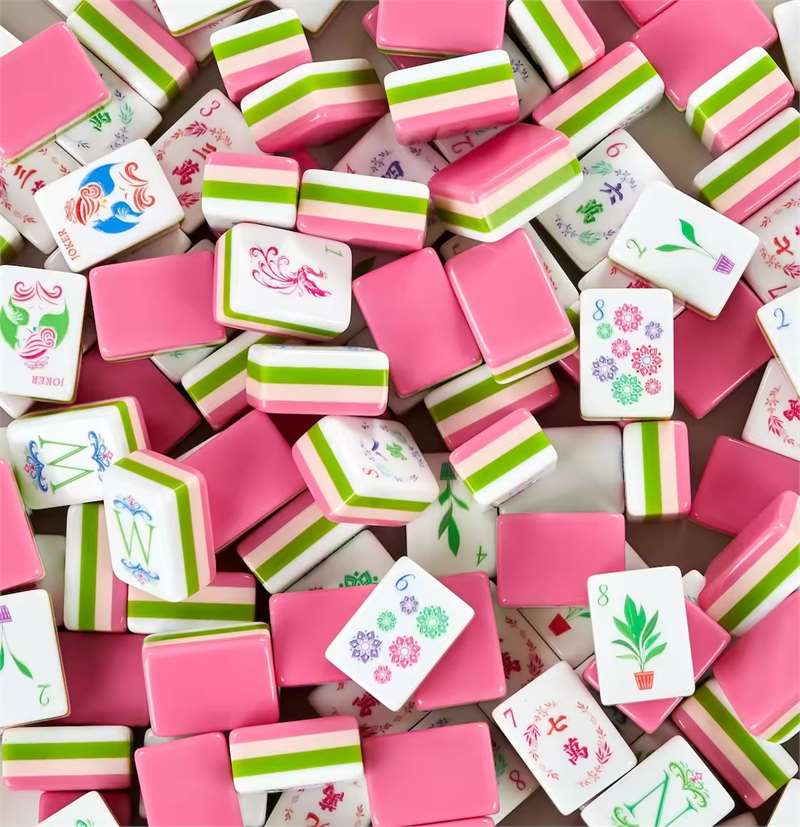
Glossy acrylic sets with a strong colorway often create the best first impression. They catch light well, photograph cleanly, and give the table a more dimensional look than purely utilitarian sets. The prepared source references also note that premium PMMA acrylic is valued for clarity and long-term resistance to yellowing.
Tactile quality
Guests notice feel as quickly as color. A set that sounds crisp, stacks cleanly, and feels stable on the rack usually reads as more premium. Components may vary by product model and order requirements, but hosts generally want a complete American Mahjong setup with clear markings and coordinated accessories.
Durability
A hosting set sees repeated handling. Buyers should look for durable materials, clean engraving, consistent color application, and accessories that can hold up to repeated game nights without feeling flimsy after a few uses.
If you are sourcing a set rather than choosing from an existing consumer brand, Lucky Mahjong can support American Mahjong projects with different component mixes depending on order requirements. Buyers can request a clear component list before quotation, especially when comparing 152, 160, and 166-tile configurations, accessory combinations, or packaging options.
Three Questions Every Host Asks
How many sets do I need for a larger Mahjong party?
American Mahjong is played with exactly four players per table. For eight guests, plan for two complete sets. For twelve guests, plan for three. Each table should be self-contained with its own tiles, racks, pushers, dice, and wind indicator.
Do I need a dedicated Mahjong table?
No. A dedicated table can improve comfort, but a stable square table plus a quality mat delivers most of the benefit. What matters more is having enough room for the wall, the racks, the discard area, and the NMJL card without forcing players to crowd the edge.
How do I introduce beginners without slowing the whole night down?
The most practical structure is one newer player per table with three experienced players. Clear tile markings matter here. A visually beautiful set still needs to stay readable from every seat, especially when new players are learning suits, honors, and flow.
Sources & References
- Icon Era, Board Game Sales & User Statistics 2026: icon-era.com/statistics/board-game-sales-statistics
- Business Research Insights, Board Games and Tabletop Games Market 2026 to 2035: businessresearchinsights.com/market-reports/board-games-and-tabletop-games-market-119459
- National Mah Jongg League, History & Membership: nationalmahjonggleague.org/league.aspx
- PMMA Online, FAQ on UV Resistance and Material Properties: pmma-online.eu/pmma-science/faq