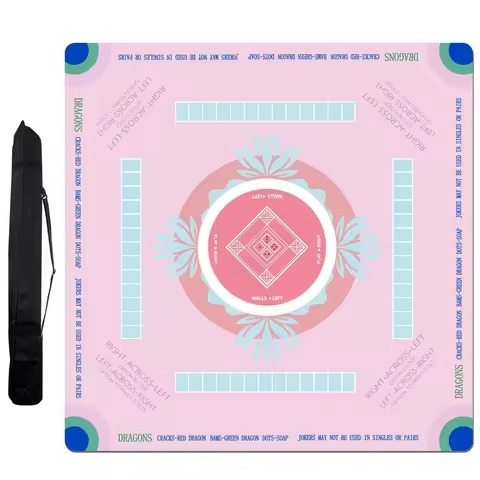
A Mahjong mat is not just a table protector. It changes how tiles sound when placed, how the table looks in product photos, how comfortable players feel during a long game, and how a brand presents itself in retail packaging. The wrong material can make tiles slide, create harsh clicking sounds, or wear out after one season.
This guide compares the four most common Mahjong mat materials so buyers can make an informed decision before requesting a quote.
Quick Comparison Table
| Material | Tile Sound | Slide Control | Durability | Print Quality | Weight | Cost Signal |
|---|---|---|---|---|---|---|
| Neoprene | Soft, muted | High | Excellent | Full-color, photo-quality | Medium | Mid-High |
| Felt-style | Soft | Medium | Good | Limited to simple graphics | Light | Low-Mid |
| Rubber-backed | Moderate | Very High | Very Good | Good for bold graphics | Heavy | Mid |
| Vinyl / PU | Crisp | Low-Medium | Fair | Full-color possible | Light | Low |
Why Material Matters More Than Buyers Think
Material selection affects more than surface feel. It influences perceived quality, shipping cost, print scope, cleaning claims, and how well the mat fits inside a bundled Mahjong set. For boutique brands, the mat is often one of the largest visual surfaces in the whole collection, which means it can reinforce or weaken the brand story.
Neoprene Mahjong Mats
Neoprene is the most popular material for premium Mahjong mats. It is the same material family used for high-end gaming playmats and mouse pads, which makes it familiar to manufacturers and dependable for full-color branded printing.
Advantages:
- Excellent tile sound dampening with a soft, satisfying landing feel.
- Strong anti-slip control that helps tiles stay where players place them.
- Full-color, edge-to-edge print capability for logos, patterns, and teaching layouts.
- Rolls up compactly for storage, gifting, and travel-oriented bundles.
- Professional, retail-ready appearance for boutique and private label brands.
Considerations:
- Higher cost than felt-style or vinyl options.
- Slightly heavier than felt, though lighter than heavy rubber-backed formats.
- Final color can shift slightly between print batches, so approvals still matter.
Best for: boutique brands, private label collections, premium gift sets, Mahjong clubs, and event organizers who want a brand-identifiable mat.
Thickness direction: available thickness depends on the selected construction, buyer preference, packaging plan, and quotation details.
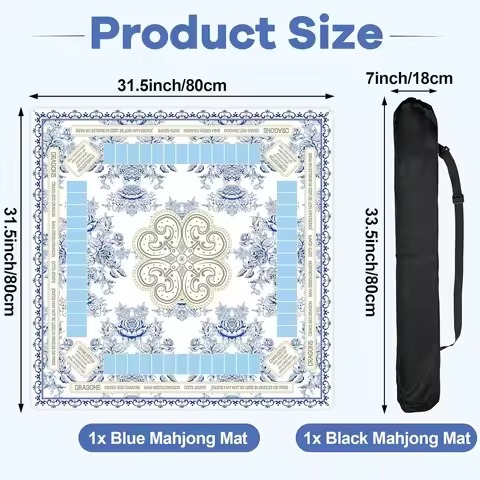
Felt-Style Mahjong Mats
Felt-style mats use a fabric surface, sometimes with a thin non-slip backing. They are the traditional choice and remain popular for casual play and budget-sensitive orders.
Advantages:
- Soft, classic feel that many players expect.
- Lightweight and easy to store.
- Often practical for bulk orders with tighter cost targets.
- Available in many solid-color directions.
- Simple to produce for larger quantities.
Considerations:
- Limited print capability, often restricted to simpler logo or border treatments.
- More prone to pilling and surface wear over time.
- Less effective at preventing tile sliding during active play.
- Stains are harder to remove and claims should stay conservative.
Best for: high-volume club orders, community programs, casual home play, and projects where budget matters more than print complexity.
Thickness direction: confirm thickness and backing requirements during quotation.
Rubber-Backed Mahjong Mats
Rubber-backed mats combine a fabric or printed top surface with a heavier rubber underside. They are typically the most stable mat type on the table.
Advantages:
- The strongest anti-slip performance for clubs, teaching, and tournament settings.
- Heavier weight can signal a more substantial, premium feel.
- Good print quality on the top fabric layer.
- Very durable when repeated table stability matters.
- Excellent sound dampening when paired with a textile top.
Considerations:
- Heavier material raises shipping cost and carton planning pressure.
- Harder to roll tightly, so carrying-case sizing matters.
- Fresh rubber odor can appear initially and usually needs airing out.
- Cleaning claims should remain limited to spot-cleaning unless the construction is verified.
Best for: Mahjong tournaments, clubs, teaching environments, and any setting where table stability is critical.
Thickness direction: confirm final thickness, backing, and packing method during sampling.
Vinyl and PU Mahjong Mats
Vinyl and polyurethane mats offer a smoother, wipeable surface at a lower price point. They are common in entry-level sets and promotional formats.
Advantages:
- Often a cost-sensitive option for entry-level bundles.
- Water-resistant surfaces are easier to wipe clean.
- Lightweight and easy to fold or store.
- PU surfaces can support full-color printing.
Considerations:
- Tiles tend to slide more than on neoprene or rubber-backed mats.
- Sound is sharper and less dampened.
- Fold lines, cracking, or peeling can become an issue over time.
- The hand-feel is usually less premium for gifting or lifestyle positioning.
Best for: budget-friendly sets, travel mats, promotional giveaways, and entry-level retail.
Thickness direction: confirm final thickness and backing construction with the supplier.
How to Choose the Right Material
For Boutique Brands and Private Label
Choose neoprene. It offers the best balance of print quality, durability, and premium feel. The mat becomes part of the collection identity rather than an afterthought.
For High-Volume Wholesale
Choose felt-style or vinyl if budget is the primary concern. For slightly higher quality without a major cost jump, consider a thinner neoprene construction and confirm the exact material during sampling.
For Clubs and Tournaments
Choose rubber-backed. Stability matters most in teaching and repetitive gameplay, and the heavier base helps keep the surface fixed during active play.
For Travel Sets
Choose thin neoprene or vinyl. Both can store compactly. Neoprene usually offers better feel and durability, while vinyl can reduce cost.
For Gift Sets
Choose neoprene. A custom-printed neoprene mat lifts the entire unboxing presentation and photographs better for ecommerce and social media.
Mat Size and Print Direction
| Mat Size Direction | Best For | Table Type |
|---|---|---|
| Square mat | Standard home play | Square card table |
| Larger square mat | Club play or teaching | Larger square table |
| Oversized square mat | Premium and teaching | Oversized table |
| Rectangular mat | Travel and compact play | Rectangular table |
Custom sizes are available for private label projects. Confirm size requirements during quotation before finalizing cases, inserts, or folded packaging.
Custom Print Options by Material
| Print Type | Neoprene | Felt | Rubber-Backed | Vinyl / PU |
|---|---|---|---|---|
| Full-color edge-to-edge | Yes | No | Yes, on top surface | Yes, on PU |
| Logo and border | Yes | Yes, usually simpler | Yes | Yes |
| Teaching layout | Yes | No | Yes | Yes |
| Photographic artwork | Yes | No | Yes | Yes, on PU |
| Pantone color matching | Possible | Limited | Approximate | Approximate |
FAQ
What is the best material for a Mahjong mat?
Neoprene is the best overall choice for most buyers. It balances sound dampening, anti-slip control, print quality, and durability. Rubber-backed mats are stronger for stability, while felt-style and vinyl can fit lower-cost projects.
What size Mahjong mat do I need?
Choose the size based on table size, target market, packaging plan, and whether the mat is sold alone or bundled with a Mahjong set. Square formats are common for home and club play, while rectangular formats can work for travel-oriented formats.
Can I print my logo on a Mahjong mat?
Yes. Neoprene supports full-color, edge-to-edge printing including logos, patterns, teaching layouts, and photo-like artwork. Felt mats are usually limited to simpler graphics, while rubber-backed and PU mats support custom printing with different quality levels.
How thick should a Mahjong mat be?
Thickness depends on material, sound dampening targets, packaging method, target price point, and freight plan. Confirm the final thickness during sampling and quotation.
Are custom Mahjong mats available for wholesale?
Yes. Lucky Mahjong supports custom Mahjong mats for wholesale, private label, and boutique-brand projects. Final MOQ, price, and lead time are confirmed during quotation based on material, size, print scope, and packaging.
How do I clean a Mahjong mat?
Care instructions depend on the exact material, backing, print method, and edge finishing. Buyers should request care guidance for the final construction before adding cleaning claims to packaging or product pages.
Next Steps for Buyers
Request a wholesale quote when you know the material direction, size, quantity, and print scope. If the mat is part of a larger Mahjong collection, align the mat decision with the tile set, carrying bag, accessories, and packaging concept before sampling.