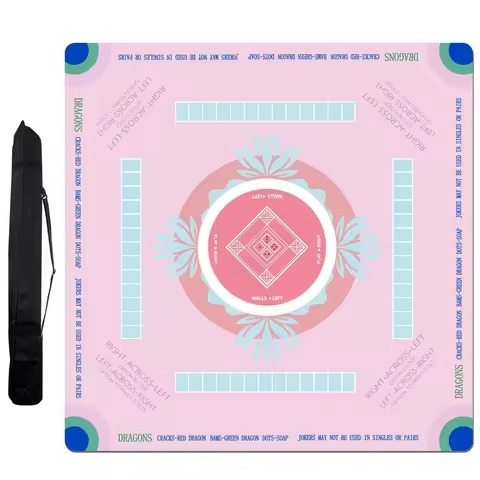
A Mahjong mat is the first thing players see when they sit down. It protects the table, dampens tile-clicking sound, prevents tiles from sliding, and adds color and personality to the game. Yet many buyers pick a mat as an afterthought, only to discover it is too small, too slippery, or too thin.
This guide walks through the main buying decisions so you can choose a mat with more confidence, whether you are sourcing for personal use, a retail bundle, a club, or a private label collection.
Why You Need a Mahjong Mat
A good mat improves more than aesthetics. It protects wood, glass, and lacquer surfaces from repeated tile contact. It softens the sound of acrylic and melamine tiles. It helps tiles stay stable during active play, and it improves product photography and retail presentation.
Step 1: Measure Your Table
| Table Type | Table Direction | Mat Planning Direction |
|---|---|---|
| Square card table | Standard square play surface | Square mat sized to the center play area |
| Square folding table | Larger square play surface | Larger square mat with comfortable edge margin |
| Oversized square | Extra tabletop space | Oversized mat if packaging and shipping allow |
| Rectangular dining table | Rectangular play surface | Rectangular or square mat depending on layout |
| Round table | Round surface with square play zone | Square mat that fits safely inside the table edge |
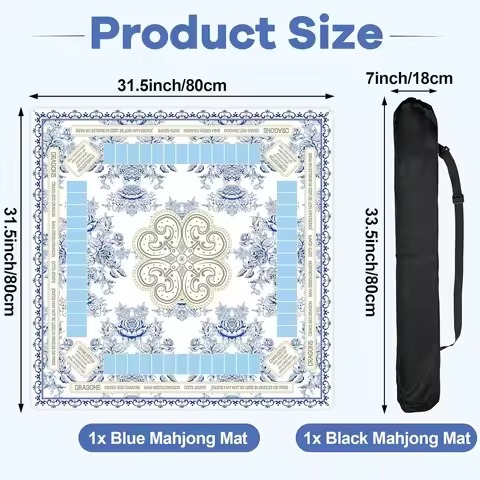
The mat should cover the main play area without hanging off the table edge. A mat that is too small leaves table edges exposed, while a mat that is too large can interfere with seating, storage, or rolled packaging.
Step 2: Choose Your Material
Neoprene
Best for: boutique brands, premium gift sets, clubs, and buyers who want the strongest balance of feel, sound dampening, and print quality.
Neoprene supports full-color custom printing, rolls well for storage, and usually offers the most premium play experience. Final care method and cost should still be confirmed during quotation because both depend on construction and print process.
Felt
Best for: budget buyers, casual home play, and higher-volume bulk orders.
Felt mats are soft, lightweight, and affordable. They can work well when budget matters more than print complexity, though they usually offer lower print clarity and lower long-term durability than neoprene.
Rubber-Backed
Best for: tournaments, clubs, and competitive settings where table stability matters most.
Rubber-backed mats have a fabric top with a heavier underside that helps the mat stay fixed in place. The tradeoff is weight and portability.
Vinyl / PU
Best for: entry-level sets, travel mats, and promotional projects where price is the main driver.
These mats are lightweight and wipeable, but they generally offer less sound dampening and less tile grip. PU surfaces can still support color printing when the design scope needs more than a plain mat.
Step 3: Decide on Thickness
| Thickness Direction | Feel | Sound Dampening | Portability | Cost Signal |
|---|---|---|---|---|
| Thin | Lightweight | Lower | Strong | Lower |
| Standard | Balanced | Moderate | Strong | Mid |
| Thicker | More cushioned | Higher | Moderate | Higher |
| Extra thick | Substantial | Higher | Lower | Highest |
Choose thickness based on the material, packaging method, freight plan, and target customer. Standard thickness is enough for many projects, while thicker constructions can work better for premium gift sets if carton size and shipping cost still make sense.
Step 4: Choose the Print Scope
- No print / solid color: the simplest and most cost-effective direction.
- Logo and border: common for private label projects and club branding.
- Full-surface pattern: best on neoprene when visual identity matters.
- Teaching layout: useful for beginners, classes, and instructional sets.
- Full custom artwork: strongest on neoprene and some PU constructions.
If custom print is likely, choose the material with print capability from the start rather than trying to upgrade later after sampling.
Step 5: Match the Mat to the Tile Set
| Tile Style | Suggested Mat Direction |
|---|---|
| Pastel tiles | Neutral cream, grey, navy, or a coordinated pastel tone |
| Bold tiles | Contrasting dark mat such as black or deep navy |
| Botanical / green tiles | Natural tones such as sage, ivory, or warm beige |
| Classic / tortoise shell | Deep green or burgundy felt-style direction |
| Clear acrylic tiles | Darker mat for stronger visual contrast |
| Travel sets | Compact neoprene or vinyl direction |
Step 6: Consider Bundling
A mat becomes more valuable when it is planned as part of a coordinated collection. Common bundle directions include tiles plus mat plus racks and pushers, a mat plus carrying bag for travel, or a tile set plus mat and gift box for retail gifting. Matched collections usually sell better than disconnected individual items.
Step 7: Evaluate Cost vs. Value
| Buyer Type | Recommended Setup | Cost Signal |
|---|---|---|
| Casual home player | Felt, solid color | Lowest |
| Mahjong club organizer | Rubber-backed with club logo | Mid |
| Boutique brand | Neoprene with full-color print | Mid-High |
| Premium gift set | Neoprene with custom artwork and gift packaging | Highest |
| Travel set | Compact neoprene or PU direction | Low-Mid |
Cost depends on material, thickness, print scope, size, quantity, and packaging. Final pricing should always be confirmed during quotation.
Step 8: Plan Packaging and Storage
- Rolled with strap: compact and retail-friendly.
- Rolled in carrying bag: a stronger premium presentation.
- Folded in gift box: formal presentation but possible fold-line risk.
- Flat-packed: lower freight efficiency for many premium constructions.
For most retail projects, a rolled mat with a branded strap or sleeve creates the cleanest unboxing experience.
Common Mistakes to Avoid
- Choosing a mat that is too small for the main play area.
- Prioritizing price without checking durability and print limitations.
- Ignoring likely future print needs when selecting the base material.
- Planning mats, tiles, and accessories separately instead of as one collection.
- Skipping physical samples before bulk production.
FAQ
What size Mahjong mat do I need for a standard card table?
Start by measuring the tabletop and the center play area. Most buyers choose a square mat for a square card table, then adjust the final size based on table dimensions, packaging, and whether the mat is sold alone or bundled with a set.
What is the best Mahjong mat material for noise reduction?
Neoprene is usually the best option for noise reduction because its foam structure absorbs tile impact well. Rubber-backed mats with fabric tops also perform well, while vinyl and PU offer less dampening.
Can I wash my Mahjong mat?
Care instructions depend on the exact material, backing, print method, and edge finishing. Follow the supplier's guidance for the final construction before adding any cleaning claims to packaging or product pages.
How much does a custom Mahjong mat cost?
Cost depends on material, thickness, size, print scope, quantity, and packaging. Neoprene mats with custom printing usually cost more than felt or vinyl, and larger bulk orders normally reduce the per-unit cost.
Do I need a mat to play Mahjong?
A mat is not required, but it is strongly recommended. It reduces noise, improves tile stability, protects furniture, and improves the presentation of the game.
Can I get a custom Mahjong mat with my brand logo?
Yes. Lucky Mahjong supports custom Mahjong mats with logos, patterns, teaching layouts, and full-color artwork. Neoprene is usually the strongest choice for custom printing, with final MOQ and pricing confirmed during quotation.
Next Steps for Buyers
Request a quote when you know your preferred material, target size, and approximate quantity. If the mat is part of a coordinated product line, align the mat plan with tiles, carrying formats, accessories, and packaging before approving samples.