
Quick Answer
To launch an American Mahjong brand, define the buyer and product identity first, then move through artwork, accessory coordination, sample approval, production planning, and a disciplined launch strategy. The lowest-risk path is usually a focused first collection with clear packaging, repeatable QC standards, and a manufacturer that can support low-to-moderate MOQ production.
Key takeaways
- The convergence of social media marketing, low-MOQ manufacturing, and direct-to-consumer ecommerce has made niche Mahjong brands far more viable than they were a decade ago.
- For American Mahjong specifically, the opportunity often sits in premium gifting, boutique retail, bridal events, club-ready accessories, and design-led private label collections that speak to a clearly defined customer.
- The strongest first launch is rarely the most complicated one.
On this page
The Opportunity for Independent Mahjong Brands
The convergence of social media marketing, low-MOQ manufacturing, and direct-to-consumer ecommerce has made niche Mahjong brands far more viable than they were a decade ago. Independent founders do not need to invent a new game system or build a factory. They need a distinct visual point of view, a practical go-to-market plan, and a supply partner who can translate design intent into repeatable production.
For American Mahjong specifically, the opportunity often sits in premium gifting, boutique retail, bridal events, club-ready accessories, and design-led private label collections that speak to a clearly defined customer.
The strongest first launch is rarely the most complicated one. Founders usually perform better with a focused product story, disciplined accessory selection, and packaging that looks premium without overloading the MOQ.
Phase 1: Design and Concept
Before a single tile is sampled, define who the set is for. A bridal buyer, a boutique gift store, a weekly club player, and a lifestyle ecommerce brand will each need different price points, accessories, materials, and visual language.
- Define the buyer: Clarify use case, retail price range, channel, and expected visual mood.
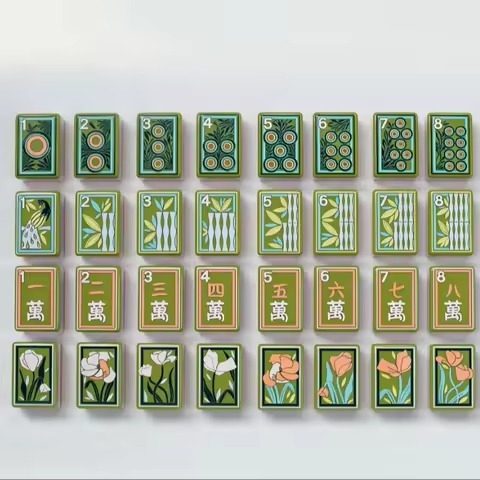
- Design the tile system: Decide whether you will use standard character faces with custom colors or invest in original tile artwork and branded joker treatments.
- Select materials and finish: Align body color, engraving fill, translucency, and surface finish with your intended positioning.
- Plan the accessory system: Racks, pushers, dice, cases, and cartons should feel coordinated rather than added at the last minute.
If you are still defining artwork specs, the custom Mahjong artwork file requirements guide is a practical next read before entering sample production.
Phase 2: Sampling and Approval
Sampling is where many brand launches either become disciplined or drift into expensive rework. Manufacturers should provide sample tiles and accessory references that let you assess material, color accuracy, engraving clarity, and component fit together as a system.
What to Check in Tile Samples
- Color accuracy: Compare the body color and fill against the intended Pantone direction under multiple lighting conditions.
- Engraving quality: Check depth, edge cleanliness, fill consistency, and symbol readability.
- Hand feel: Confirm weight, edge finish, and tactile quality rather than relying only on photos.
- Material clarity: For acrylic projects, confirm translucency and polish consistency across the sample set.
What to Check in Accessories
- Dimensional fit: Racks, pushers, and the case should work correctly with the selected tile size.
- Brand execution: Verify monograms, labels, zipper pulls, inserts, and logo placement.
- Perceived value: The case exterior and packaging must support the target retail tier immediately.
Physical approval matters. Photos cannot reliably confirm weight, finish, or tactile feel, which is why serious founders sign off only after handling samples in person.
Phase 3: Production Planning and Quality Control
Once samples are approved, bulk production typically includes material sourcing, tile manufacturing, engraving, fill, accessory assembly, quality control, and export packing. A moderate first order commonly falls into a four-to-six-week production window, depending on customization depth and packaging complexity.
At minimum, your QC checklist should verify full tile count, color consistency, engraving quality, accessory inclusion, and package accuracy across every shipment lot. If you are comparing suppliers, the manufacturer guide for MOQ, custom options, and lead time can help frame the production discussion.
Phase 4: Launch and Distribution
Product quality alone is not enough. A first launch needs photography, pricing discipline, and a distribution plan that matches the customer you chose during the concept stage.
- Photography: Capture lifestyle, flat-lay, and close-up details that communicate finish, material, and packaging quality.
- Pricing: Position the line clearly as budget, premium, or luxury rather than drifting between tiers.
- Sales channel: Choose whether the first run is aimed at DTC, boutique wholesale, events, or a blend of channels.
- Restock logic: Plan reorder timing before launch so you do not win demand and then fail on continuity.
Three Questions New Brand Founders Ask
How much capital do I need to launch a mahjong brand?
A realistic lean launch often lands in the USD 4,500 to 13,000 range when you combine initial inventory, brand setup, photography, website work, and initial marketing. The exact number depends on packaging depth, tile specification, and how premium the first collection needs to feel.
Do I need to design tiles from scratch, or can I customize existing designs?
Both approaches work. Many first-time founders use standard face designs with custom colors, branded jokers, and upgraded packaging before investing in fully original tile faces. That usually reduces risk and keeps the first timeline shorter.
How do I protect my brand's tile designs from being copied?
Original artwork can be protected through copyright, while brand names and logos should be protected through trademark filings in core markets. It is also worth documenting design development dates and addressing confidentiality or exclusivity terms before releasing source files to production partners.
Lucky Mahjong can help brands compare MOQ scenarios, artwork paths, material options, and packaging structures before sample production begins.
Request a QuoteSources & References
Buyer checklist
- Define the first buyer, sales channel and collection scope.
- Budget samples, artwork, inventory, packaging and delivery separately.
- Record sample approval, launch timing and reorder version control.
Production notes
Launch examples are planning guidance, not sales forecasts or fixed commercial terms. Confirm the product scope and approval milestones before making commitments.
Continue your project planning
For a project review, see Private label American Mahjong. The cluster overview connects this decision with the rest of the sourcing process.
Building your private label collection?
Send quantity, tile count, target dimensions, artwork status, accessories, packaging, destination and launch date. These details help define a comparable quotation and sample scope.
Discuss a private label project