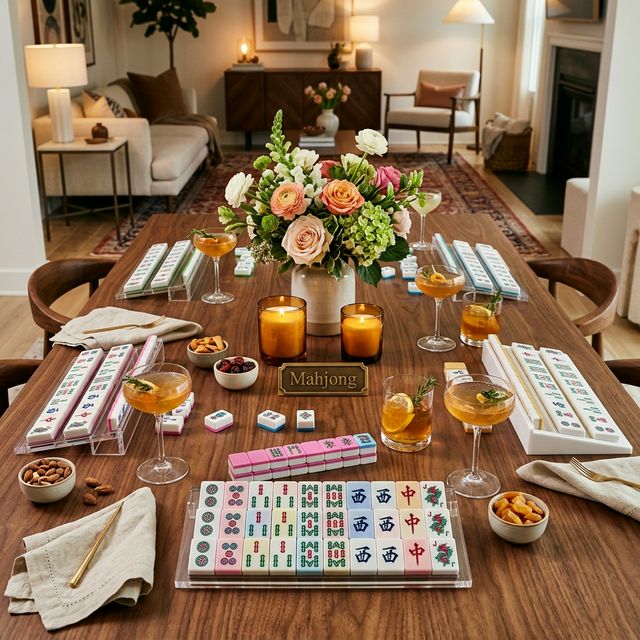
For American Mahjong buyers, tile size is not just a product detail. It affects how the set feels on the table, how readable the faces are for players, whether racks and pushers fit correctly, how heavy the full set becomes, and how much protection the packaging needs during shipping.
A beautiful tile design can still create customer complaints if the dimensions feel awkward, the numerals are too small, the racks do not match the tile depth, or the case cannot hold the full American-style configuration. For retailers, clubs, gift brands, and private label programs, tile size should be confirmed before artwork approval and before bulk production.
Direct answer for buyers
Most American Mahjong retail programs should choose tiles that feel stable in the hand, are easy to read across the table, and fit standard American-style accessories such as racks, pushers, dice, cases, and storage trays.
The exact dimension can vary by supplier and material, but the buyer should confirm four things before ordering:
- Tile dimensions: height, width, and thickness must be consistent across the full set.
- Face readability: Arabic numerals, letters, suits, flowers, and jokers should be clear for mixed-skill players.
- Accessory fit: racks, pushers, trays, and cases must match the tile depth and full set count.
- Pack weight: larger or heavier tiles may need stronger packaging, better inserts, and revised carton plans.
Why tile size matters in American Mahjong
American Mahjong is played differently from many Chinese-style Mahjong formats. Players commonly use racks and pushers, refer to an annual card system, and expect jokers, blanks, and American-style tile markings. That means the tile must be comfortable not only for hand feel, but also for table organization.
If a tile is too small, the set may look less premium and may be harder to read for social play, club play, or older players. If a tile is too large or too thick, the full set can become heavy, the racks may feel crowded, and the case may need more structure.
For wholesale buyers, the best size is usually not the biggest tile. It is the size that matches the product positioning, target customer, packaging budget, and accessory system.
Key dimensions to confirm before sampling
Before approving a sample, ask the factory or supplier to confirm the exact dimensions in millimeters. Do not rely only on photos. A lifestyle image can make tiles look premium, but it cannot show whether the tile depth fits the rack or whether the case closes properly.
Use this checklist during sampling:
| Specification | What to confirm | Why it matters |
|---|---|---|
| Tile height | Full vertical measurement | Affects table presence and readability |
| Tile width | Face width | Affects artwork spacing and numeral size |
| Tile thickness | Depth of tile | Affects rack fit, weight, and storage |
| Tile weight | Average per tile | Affects full set weight and shipping cost |
| Edge finish | Rounded, polished, or straight | Affects hand feel and premium perception |
| Face method | Printed, engraved, or filled | Affects durability and readability |
For custom American Mahjong sets, these details should be included in the specification sheet, purchase order, and pre-production sample approval notes.
Readability is part of sizing
A tile can be technically large enough but still hard to read if the artwork is crowded. American Mahjong buyers often care about clear Arabic numerals and letters because many players include beginners, family groups, club members, and mixed-age players.
When reviewing tile artwork, check:
- Are the numbers large enough to read from across the table?
- Are the suits visually distinct?
- Are the jokers easy to identify quickly?
- Are flowers and seasons decorative but still practical?
- Is there enough white space around the artwork?
- Does the design remain clear under warm indoor lighting?
For private label sets, design teams sometimes make the artwork too delicate because it looks beautiful on a screen. The real test is whether a player can identify the tile quickly during a game.
Racks and pushers must match the tile system
American Mahjong sets are often sold with racks and pushers. These accessories are not optional details; they are part of the playing experience. If the tile thickness does not match the rack channel, players may notice immediately.
Before bulk production, test the complete set as a system:
Place a full row of tiles on the rack.
Check whether the tiles stand securely without wobbling.
Confirm the pusher moves smoothly without scratching tile faces.
Test whether the rack feels crowded during normal play.
Pack the racks, pushers, and tiles into the case and confirm the case closes cleanly.
This is especially important for private label programs where the tiles, racks, case, and inserts may be customized at the same time.
Material changes the size decision
Tile material affects how size feels. Acrylic tiles often feel heavier and more premium, so buyers may not need an oversized tile to create perceived value. Melamine tiles can be practical and durable for clubs, teaching, and value wholesale programs, but the finish and readability still need to be controlled.
For premium gift sets, a slightly heavier tile with polished edges can support a more elevated retail price. For club or teaching sets, a practical size that is easy to handle, durable, and cost-stable may be more important than luxury weight.
The material decision should be made together with tile size, case design, and shipping plan.
Packaging and shipping impact
A full American Mahjong set includes more than tiles. A retail-ready set may include racks, pushers, dice, wind indicators, instructions, storage trays, a carrying case, retail carton, and export carton. When tile size or material changes, the entire packaging system may need adjustment.
Larger or heavier tiles can require:
- stronger trays or inserts;
- better separation between tile rows;
- reinforced cases;
- more protective export cartons;
- updated carton weight estimates;
- revised shipping quotes.
For wholesale buyers, this matters because packaging failures can damage the customer experience even when the tiles themselves are well made.
QC checklist for bulk orders
Use the approved sample as the control standard, then check bulk production against it. At minimum, the inspection should cover:
- Dimensions: randomly measure tile height, width, and thickness from multiple sets.
- Weight: compare average tile weight and full set weight against the approved sample.
- Readability: inspect numerals, letters, jokers, flowers, and suit clarity.
- Color consistency: compare tile body color, backs, and printed artwork across batches.
- Accessory fit: test racks, pushers, case, trays, and inserts with actual production tiles.
- Set configuration: confirm American-style tile count, jokers, blanks, and accessories.
- Packing: perform carton, tray, and case checks before shipment.
For a deeper quality workflow, buyers can also review Shipping & Quality Control and the American Mahjong sourcing guide.
Recommendation by buyer type
For boutique retailers and gift shops, choose a size and material that feel premium but still fit elegant packaging. The set should photograph well, feel substantial, and arrive without packaging damage.
For clubs and teachers, prioritize readability, stable racks, durable tiles, and practical cases. Players will care more about usability than novelty.
For private label brands, approve tile dimensions together with artwork, racks, pushers, inserts, and case design. Do not approve the tile face in isolation.
For distributors, keep the size consistent across reorders. Even small dimension changes can create accessory fit issues or customer confusion.
Buyer FAQ
What is the best tile size for American Mahjong sets?
The best size is one that balances readability, hand feel, rack fit, case fit, and shipping weight. Buyers should confirm dimensions in millimeters and test the complete set before bulk production.
Are larger Mahjong tiles always better?
No. Larger tiles can feel premium, but they can also increase set weight, packaging cost, and accessory fit risk. A well-balanced tile is usually better than an oversized tile.
Should I approve tile artwork before confirming size?
No. Tile size, face layout, numeral size, and artwork spacing should be reviewed together. A design that looks good digitally may become crowded on the final tile.
Why do racks and pushers matter for tile sizing?
American Mahjong players commonly use racks and pushers. If the tile depth does not match the rack channel or pusher movement, the set can feel poorly engineered even if the tiles look good.
Final sourcing note
For wholesale and private label American Mahjong sets, tile size should be treated as a core product specification, not a minor design preference. Confirm the dimensions, test the accessories, check packaging fit, and document the approved sample before production.
If you are planning a custom American Mahjong set, Lukmaj can help review tile size, material, artwork files, accessories, packaging, and quality control requirements before bulk ordering.