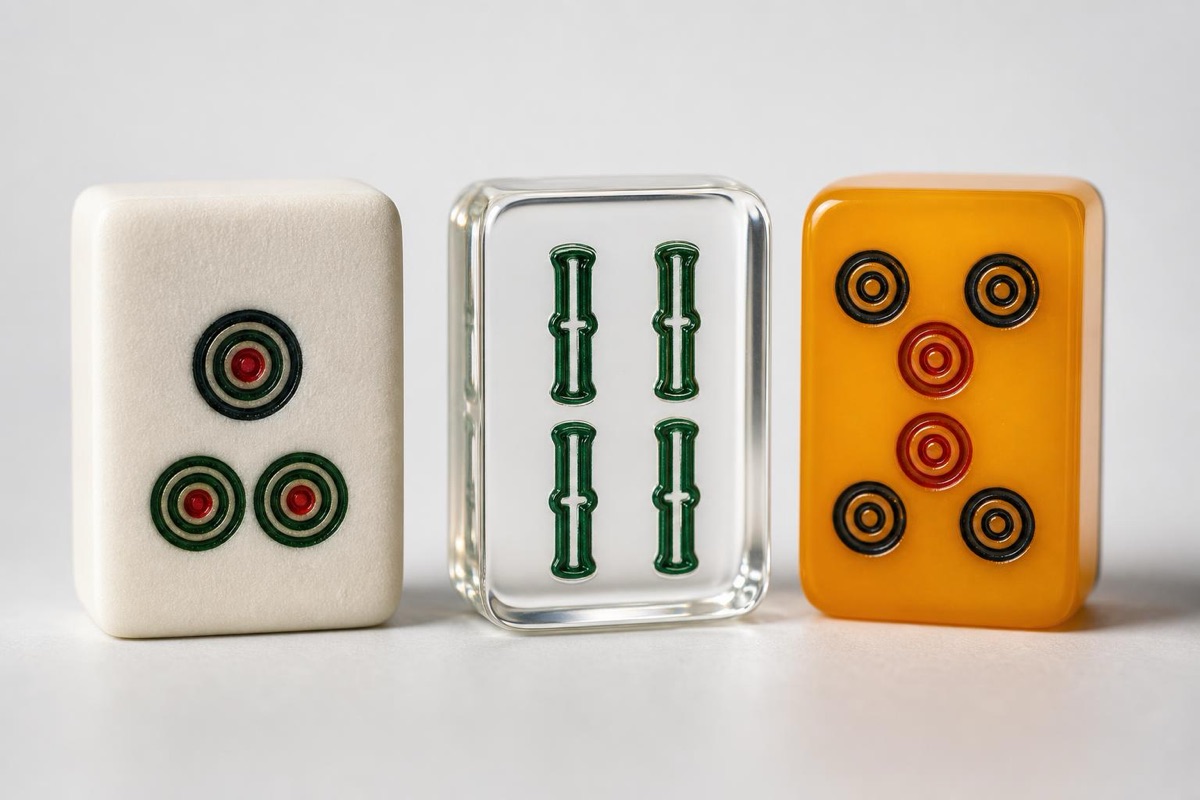
Quick Answer
Acrylic is usually the stronger direction when a buyer wants custom colors, a more premium visual identity, or a boutique gift presentation. Melamine is often the more practical choice when durability, a classic look, and repeatable volume execution matter more than deep visual customization.
The better material is not universal. Buyers should compare both against brand positioning, accessory scope, packaging requirements, and sample review goals before committing to bulk production.
Material Choice Shapes the Finished Mahjong Product
When buyers compare American Mahjong tile materials, the discussion usually starts with acrylic and melamine because both can work well, but they lead to different outcomes in appearance, feel, customization flexibility, and retail positioning.
For wholesale, OEM, and private label programs, material is not just a factory detail. It affects how the tile presents on camera, how the set feels in hand, how packaging needs to be engineered, and how easily the finished assortment matches the brand story.
Do not choose a material in isolation. Confirm tile size, face method, accessory compatibility, case fit, and packaging scope at the same time.
Acrylic vs Melamine at a Glance
| Factor | Acrylic | Melamine |
|---|---|---|
| Visual direction | Strong for premium, colorful, layered, or boutique presentations | Strong for classic, practical, or understated product lines |
| Customization | Often better for custom colors, tile backs, and special visual effects | Usually simpler and more limited in visual effect range |
| Durability fit | Good when finish and sample approval are well controlled | Often preferred for frequent-play and straightforward durability goals |
| Retail positioning | Gift-ready, design-led, social-media-friendly | Classic, durable, club-friendly, practical |
| What buyers must confirm | Clarity, finish, engraving or printing method, accessory fit, packaging | Color range, face method, size consistency, accessory fit, packaging |
When Acrylic Is the Better Fit
Acrylic is a strong direction for gift, boutique, private label, and visually distinctive American Mahjong sets. It can support solid colors, translucent effects, premium layered constructions, custom tile backs, and custom joker artwork depending on project feasibility.
This material often makes sense when the product’s visual identity is central to the brand story and when the buyer wants the set to feel editorial, giftable, or differentiated from more standard market offerings.
Useful When Buyers Need
- Custom tile colors or stronger palette control
- Premium layered acrylic constructions
- Custom jokers, tile backs, or brand-specific visual cues
- Boutique or gift-ready presentation
- Better lifestyle photography and merchandising impact
What to Confirm First
Buyers should request samples to review color consistency, clarity, finish quality, face readability, engraving or printing durability, and how the material pairs with racks, pushers, bags, and outer packaging.
When Melamine Is the Better Fit
Melamine is a practical material direction for durable, classic, or volume-focused Mahjong products. It can work well for clubs, education programs, standard retail sets, and buyers that prioritize repeatable function over more advanced visual effects.
For many buyers, melamine is less about being visually dramatic and more about being dependable, familiar, and easy to position for routine play environments.
Useful When Buyers Need
- Durable frequent-play sets
- Classic product positioning
- Practical wholesale programs
- Simpler component planning
- Cost-sensitive retail assortments
What to Confirm First
Buyers should confirm available colors, surface feel, printing or engraving options, tile size direction, rack compatibility, and packaging fit. Even a simpler material program still needs a complete sample review before production approval.
Lucky Mahjong can help buyers compare samples, confirm accessory fit, and align material choice with brand positioning, MOQ planning, and packaging scope.
Request a Wholesale QuoteHow MOQ and Sample Planning Change by Material
MOQ and sample planning should not be treated as fixed by material alone. Available acrylic materials, existing tile sizes, and production-friendly artwork may support a smaller pilot run. Semi-custom and fully custom projects usually require a deeper review because artwork complexity, packaging, mats, bags, racks, and raw material requirements can all affect feasibility.
Material samples, single benchmark tiles, or a complete custom sample set can help buyers compare acrylic and melamine before they commit to bulk production. Sample scope, fees, shipping, and any sample credit policy should be confirmed in writing.
Material Choice Also Affects Packaging
Material influences tile feel, thickness, carton planning, case fit, gift box layout, and shipping estimates. Buyers should avoid finalizing packaging before tile count, material, accessories, and storage requirements are locked.
A beautiful tile can still create problems if the case cannot protect it, if the insert does not fit the tile depth, or if the full American-style configuration becomes too heavy for the selected packaging format.
Material Review Checklist
- Compare acrylic and melamine against the target customer and price lane.
- Review sample tiles for color, finish, readability, and hand feel.
- Confirm rack, pusher, bag, case, and insert compatibility.
- Check how the material changes full-set weight and shipping assumptions.
- Approve packaging only after tile material and component count are stable.
FAQ
Is acrylic better than melamine for American Mahjong tiles?
Acrylic is often better for buyers that need custom colors, premium visual presentation, or boutique gift positioning. Melamine can be the better fit for durable, classic, or simpler volume-focused programs. The right choice depends on brand direction, accessory scope, packaging, and order requirements.
Is melamine still a good material for Mahjong sets?
Yes. Melamine can be a practical direction for clubs, education programs, standard retail sets, and frequent-play products. Buyers should confirm size, color options, face method, accessory fit, and packaging before quotation.
Can acrylic Mahjong tiles be customized?
Yes. Acrylic projects can support custom tile colors, custom tile backs, joker artwork, logo placement, and layered constructions depending on production feasibility and order scope.
Which material is better for private label Mahjong?
Private label buyers often choose acrylic when visual differentiation matters. Melamine may fit simpler or more durability-focused product lines. Either way, the sample review should include packaging and accessory fit, not just the tile itself.
Does material affect MOQ and pricing?
Yes. MOQ and pricing depend on material, tile configuration, customization scope, accessories, packaging, sample requirements, and order quantity. Buyers should confirm these details during quotation rather than assuming a fixed material-based price.
Should I request samples before choosing material?
Yes. Samples help buyers compare tile feel, color, engraving or printing quality, accessory fit, and packaging. Material decisions are much safer when the full set system is reviewed together.
For related planning, pair this guide with the tile count guide, the packaging guide, and the private label packaging checklist.